
If it ain’t got that swing……
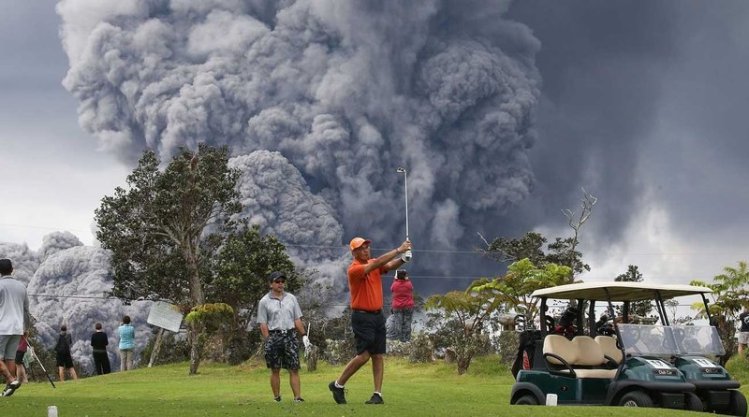
DOO WAH DOO WAH DOO WAH DOO WAH
Wait……. what???
Having been within twenty feet of a North Atlantic right whale while sea kayaking, we can attest to the magnificence of this severely stressed and endangered creature. From the website of Whale and Dolphin Conservation:
North American WDC executive director Regina Aasmutis-Silvia expanded on the crisis in a recent Living On Earth interview, excerpted below:


˜˜˜˜˜
The Woods Hole Oceanographic Institute has developed an “on call” buoy that would at least mitigate the problem of fixed-line entanglements:
Partan and Ball call their new device an “on-call” buoy. It looks like a giant spool of bright orange thread. On land, the 3.5-foot-high spool with 2,000 feet of line wound around it weighs 340 pounds, but in water, it’s buoyant and floats near the bottom attached to the lobster traps. With a timer or an acoustic signal, the device can be activated to unspool its line and float up to the surface for retrieval.
“Our system is to try to store the vertical line on the seafloor—keeping the lines out of the way of large swimming animals—until the fishing vessel crew releases it and is on site and ready to haul it in,” Partan said.

The technology is listed as “patent pending”. Will it be too little, too late? Unfortunately, we will know the answer to that question within the next few years.
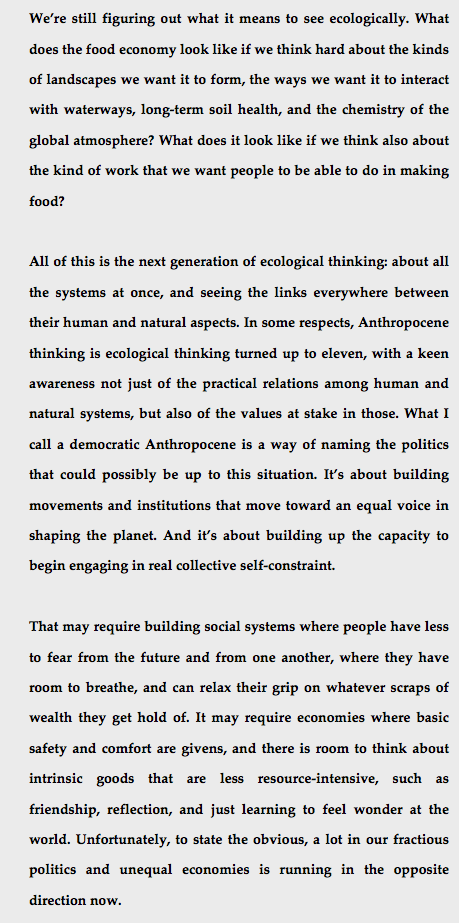
Now comes Jedediah Purdy, with excerpts from a 2015 interview that appeared in The Atlantic Monthly following the publication of After Nature, in which Purdy traces the history of the American environmental imagination, and the ways in which projected meanings and “lessons” of nature have been used to justify its exploitation. Purdy suggests that if we are to change our relationship to the living world during this time of the Sixth Extinction, we will need to radically change our understanding of what it means to be human.
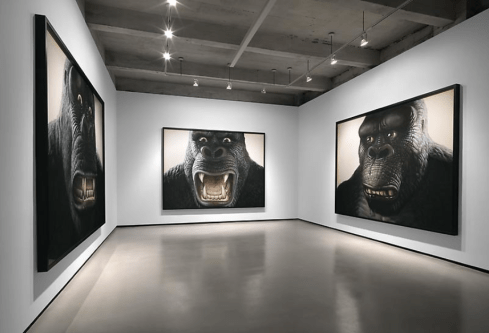
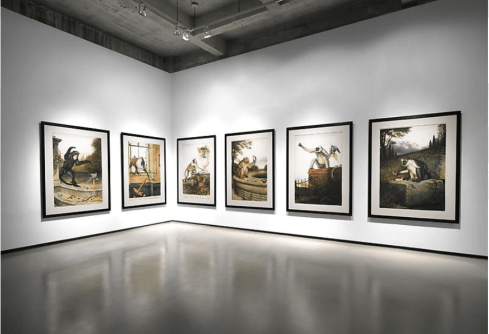
Images are from a 2011 Walton Ford exhibition, I Don’t Like To Look At Him Jack. It Makes Me Think of That Awful Day On The Island.



˜˜˜˜˜
As for the Walton Ford exhibition at Paul Yasmin Gallery dating from 2011, we find the following notes:
The first series, presenting three huge portraits of King Kong, is based on the 1933 movie co-directed by Merian C. Cooper and Ernest B. Schoedsack. As Ford explains, “The depression era Kong was misshapen, not modeled on any living ape. He has an odd, ugly, shifting charisma like Cagney, Edward G. Robinson, or Bogart. Naturally, his woman screamed in terror. She continued screaming throughout their time together. The grief of the original Kong is the grief of the unloved, and like Humbert Humbert or Frankenstein, the grief of the unlovable. In 1933, Fay Wray says words that would break any suitor’s heart. She shrinks from the chained Kong and tells her human lover, ‘I don’t like to look at him…’ Since Kong is a Hollywood tough guy, he covers up his heartbreak with violence and anger. These paintings are about Kong’s heartbreak. I wanted to reveal the monster’s grief, his enormous sadness, the sorrow that the original Kong kept hidden from view.”
Ford’s second series, which depicts a monkey capturing and strangling a parrot, was inspired by an unsettling passage from Audobon’s memoirs. Describing a childhood memory, Audobon writes: “…My mother had several beautiful parrots and some monkeys; one of the latter was a full-grown male of a very large species. One morning, while the servants were engaged in arranging the room I was in, ‘Pretty Polly’ was asking for her breakfast as usual, ‘Du pain au lait pour le perroquet Mignonne,’ the man of the woods probably thought the bird presuming upon his rights in the scale of nature; be this as it may, he certainly showed his supremacy in strength over the denizen of the air, for, walking deliberately and uprightly toward the poor bird, he at once killed it, with unnatural composure. The sensations of my infant heart at this cruel sight were agony to me. I prayed the servant to beat the monkey, but he, who for some reason preferred the monkey to the parrot, refused. I uttered long and piercing cries, my mother rushed into the room, I was tranquillized, the monkey was forever afterward chained, and Mignonne buried with all the pomp of a cherished lost one. This made, as I have said, a very deep impression on my youthful mind.”
˜˜˜˜˜
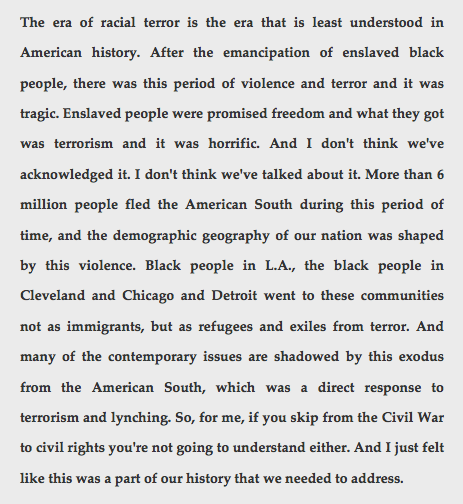
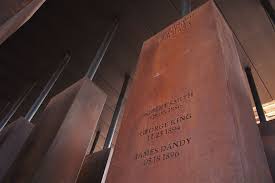
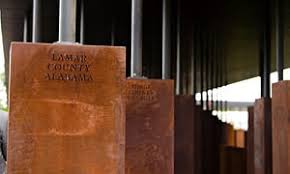
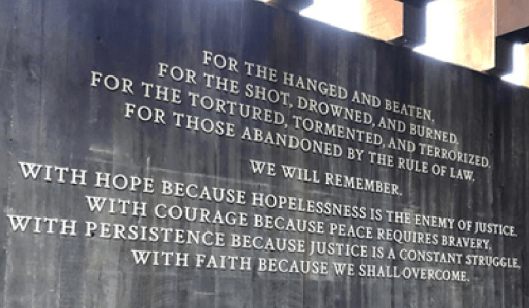
Following the opening of the Memorial For Peace and Justice in Montgomery, Alabama towards the end of last week, we relay a few excerpts from a recent interview with the executive director of Equal Justice Initiative , Bryan Stevenson.

˜˜˜˜˜
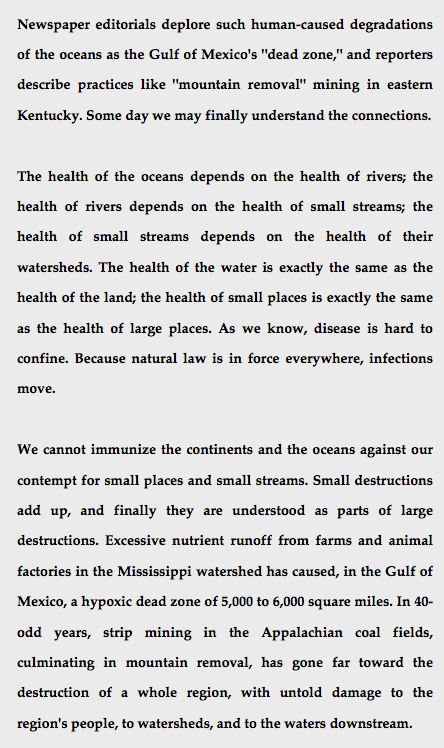
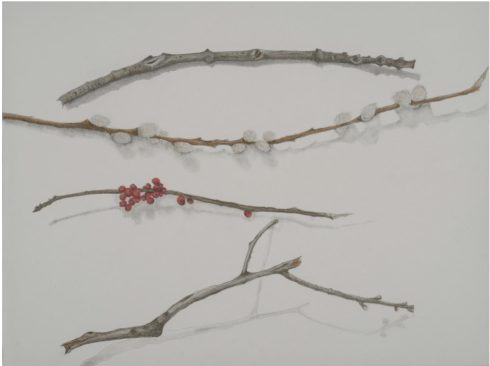
For Earth Day weekend, during a year when violence against the earth appears to be accelerating, we offer a montage of three texts: Wendell Berry, Rachel Carson and DP corresponding poet Jon Swan. Images are from Rebecca Clark’s calm yet deeply moving Book of Hours, released into the vast, murky weblands with characteristic generosity and grace.
First, let us listen to the voice of Wendell Berry, in a 2003 essay that still rings true today:
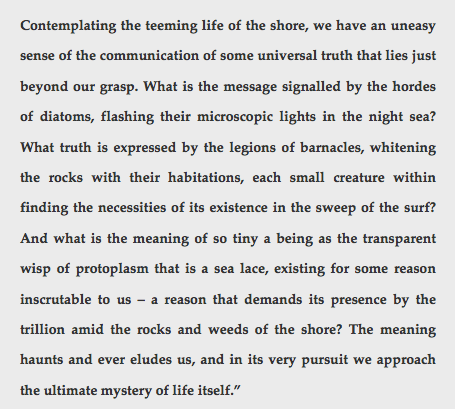
Next, we retrieve a favorite passage from Rachel Carson’s magnificent Edge of the Sea, a vivid reminder of what we have — already! — lost:

And finally, the voice of our corresponding poet Jon Swan, picking up echos from a 1961 poem by Anna Akhmatova that itself begins with an epigraph from Marina Tsvetaeva, Oh Muse of Weeping…..

˜˜˜˜˜
Beneath the “mother” poem for the Swan, Akhmatova writes:
19-20 November 1961, Leningrad,
the hospital in the harbor. In a delirium.
And from 1926, the Tsvetaeva poem ends with the following lines:
Too much rubbish? Little sweeping? — Grieving
mountains! Poets coupled by a single dash —
suspended…
over nothingness — the no one of our
bodies. And the reliable ceiling
crowed to all the angels.
˜˜˜˜˜
Almost a century later
the angels, even —
are sick from us
time to leave
˜˜˜˜˜
Now comes writer-researcher Clara Hendrickson, with a lucid critique of the political delusion at the heart of social media. Her Boston Review essay is excerpted below, with images from Andrei Lacatusu’s project, Social Decay.



˜˜˜˜˜
Regarding those deeply interested and engaged with dismantling democracy, we urge brief meditation upon the following communication, that exceeds even the darkest impulse towards satire, given the events of recent days, weeks, months:

Followed by a random headline from today’s news “feed”:


˜˜˜˜˜
Let us give the last word to James Madison:
“As the cool and deliberate sense of the community ought, in all governments, and actually will, in all free governments, ultimately prevail over the views of its rulers; so there are particular moments in public affairs when the people, stimulated by some irregular passion, or some illicit advantage, or misled by the artful misrepresentations of interested men, may call for measures which they themselves will afterwards be the most ready to lament and condemn.”
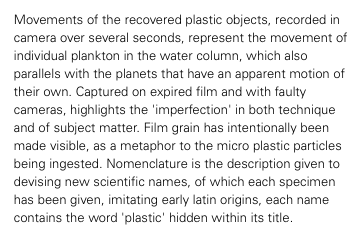
In the wake of recent research documenting the transformation of the world’s oceans into plastic soup, we turn to artist-scientist Mandy Barker, who writes:
“The aim of my work is to engage with and stimulate an emotional response in the viewer by combining a contradiction between initial aesthetic attraction along with the subsequent message of awareness. The research process is a vital part of my development as the images I make are based on scientific fact which is essential to the integrity of my work. The impact of oceanic waste is an area I am committed to pursuing through visual interpretation and in collaboration with science, hoping it will ultimately lead to positive action in tackling this increasing environmental problem which of current global concern”
In her most recent project, Barker uses John Thompson’s 19th century research into plankton as a conceptual template for proposing a new class of organism, “hatched” from degrading plastic debris. As Barker notes, plankton actually ingest plastic microfibers, thereby entering the food chain. We are what we eat.




˜˜˜˜˜
For more on microfibers, we urge consideration of the below video, from the producers of The Story of Stuff:

˜˜˜˜˜
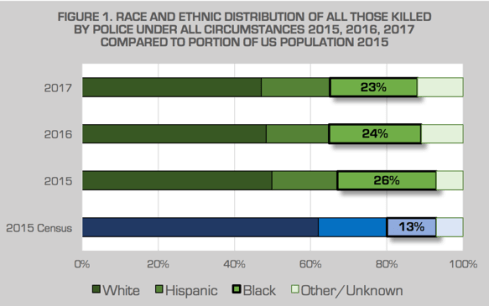
A week after hundreds of thousands of youth protested the lack of meaningful political action to reduce gun violence, and almost two weeks since the brutal murder of Stephon Clark by Sacramento police for the “crime” of holding up a cell phone in his grandmother’s garden, it is important to remember that “1 in 13 people killed by guns are killed by police.”
Writing for Counterpunch, John W. Whitehead provides a sobering list of homicidal gun violence perpetrated by those who purport to enforce the rule of law, excerpted below.
Images are from the excellent Artresponders cultural activism collective, whose intermedia project titled Cops, Color and Casualties we will explore in a future DP.
˜˜˜˜˜
There are countless incidents that happen every day in which Americans are shot, stripped, searched, choked, beaten and tasered by police for little more than daring to frown, smile, question, or challenge an order.
Growing numbers of unarmed people are being shot and killed for just standing a certain way, or moving a certain way, or holding something—anything—that police could misinterpret to be a gun, or igniting some trigger-centric fear in a police officer’s mind that has nothing to do with an actual threat to their safety.
With alarming regularity, unarmed men, women, children and even pets are being gunned down by twitchy, hyper-sensitive, easily-spooked police officers who shoot first and ask questions later, and all the government does is shrug and promise to do better.

Killed for standing in a “shooting stance.” In California, police opened fire on and killed a mentally challenged—unarmed—black man within minutes of arriving on the scene, allegedly because he removed a vape smoking device from his pocket and took a “shooting stance.”
Killed for holding a cell phone. Police in Arizona shot a man who was running away from U.S. Marshals after he refused to drop an object that turned out to be a cellphone. Similarly, police in Sacramento fired 20 shots at an unarmed, 22-year-old black man who was standing in his grandparents’ backyard after mistaking his cellphone for a gun.
Killed for carrying a baseball bat. Responding to a domestic disturbance call, Chicago police shot and killed 19-year-old college student Quintonio LeGrier who had reportedly been experiencing mental health problems and was carrying a baseball bat around the apartment where he and his father lived.
Killed for opening the front door. Bettie Jones, who lived on the floor below LeGrier, was also fatally shot—this time, accidentally—when she attempted to open the front door for police.

Killed for running towards police with a metal spoon. In Alabama, police shot and killed a 50-year-old man who reportedly charged a police officer while holding “a large metal spoon in a threatening manner.”
Killed for running while holding a tree branch. Georgia police shot and killed a 47-year-old man wearing only shorts and tennis shoes who, when first encountered, was sitting in the woods against a tree, only to start running towards police holding a stick in an “aggressive manner.”
Killed for crawling around naked. Atlanta police shot and killed an unarmed man who was reported to have been “acting deranged, knocking on doors, crawling around on the ground naked.” Police fired two shots at the man after he reportedly started running towards them.
Killed for wearing dark pants and a basketball jersey. Donnell Thompson, a mentally disabled 27-year-old described as gentle and shy, was shot and killed after police—searching for a carjacking suspect reportedly wearing similar clothing—encountered him lying motionless in a neighborhood yard. Police “only” opened fire with an M4 rifle after Thompson first failed to respond to their flash bang grenades and then started running after being hit by foam bullets.
Killed for driving while deaf. In North Carolina, a state trooper shot and killed 29-year-old Daniel K. Harris—who was deaf—after Harris initially failed to pull over during a traffic stop.
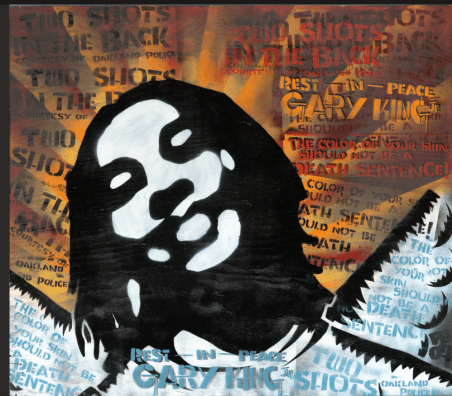
Killed for being homeless. Los Angeles police shot an unarmed homeless man after he failed to stop riding his bicycle and then proceeded to run from police.
Killed for brandishing a shoehorn. John Wrana, a 95-year-old World War II veteran, lived in an assisted living center, used a walker to get around, and was shot and killed by police who mistook the shoehorn in his hand for a 2-foot-long machete and fired multiple beanbag rounds from a shotgun at close range.
Killed for having your car break down on the road. Terence Crutcher, unarmed and black, was shot and killed by Oklahoma police after his car broke down on the side of the road. Crutcher was shot in the back while walking towards his car with his hands up.
Killed for holding a garden hose. California police were ordered to pay $6.5 million after they opened fire on a man holding a garden hose, believing it to be a gun. Douglas Zerby was shot 12 times and pronounced dead on the scene.

Killed for calling 911. Justine Damond, a 40-year-old yoga instructor, was shot and killed by Minneapolis police, allegedly because they were startled by a loud noise in the vicinity just as she approached their patrol car. Damond, clad in pajamas, had called 911 to report a possible assault in her neighborhood.
Killed for looking for a parking spot. Richard Ferretti, a 52-year-old chef, was shot and killed by Philadelphia policewho had been alerted to investigate a purple Dodge Caravan that was driving “suspiciously” through the neighborhood.
Shot seven times for peeing outdoors. Eighteen-year- old Keivon Young was shot seven times by police from behind while urinating outdoors. Young was just zipping up his pants when he heard a commotion behind him and then found himself struck by a hail of bullets from two undercover cops. Allegedly officers mistook Young—5’4,” 135 lbs., and guilty of nothing more than taking a leak outdoors—for a 6’ tall, 200 lb. murder suspect whom they later apprehended. Young was charged with felony resisting arrest and two counts of assaulting a peace officer.
˜˜˜˜˜
Finally, from the Sociology Toolbox, four charts that communicate the heart of the story:


˜˜˜˜˜
One of our core themes here at DP:
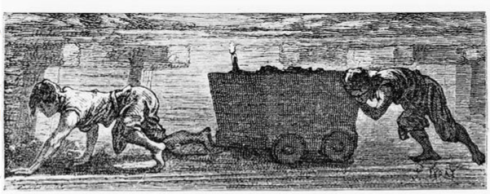
Our social life-world has become increasingly transformed into a vast data mine, an extractive and highly lucrative corporate bonanza in which the “mine” is our own subjectivity, together with whatever is left of our communities and collective identities.
The behavioral psychology lab offers the dominant social organizational model, with strip miners such as Facebook, Alphabet and Twitter at one end of the spectrum, and more focused drill-hole miners at the other end, such as black sites and Guantanamo Bay.
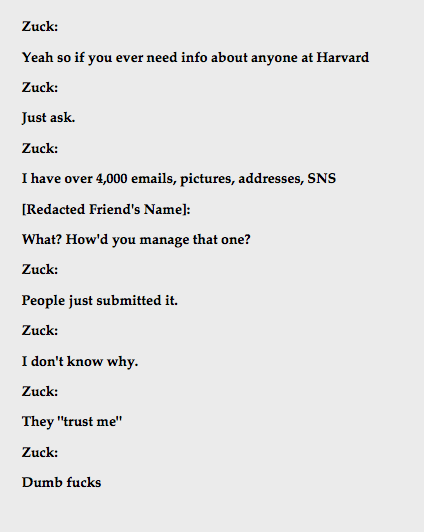
Full disclosure: DP has no personal experience of Facebook, having declined to “connect” in a way that so obviously destroyed personal privacy and web autonomy. We submit for your consideration a montage of quotes and captioned images, beginning with a charming IM thread from the Prime Digger of the FB Data Mine, twitching his thumbs in a rare moment of brutal honesty, dating from 2004:
TWO TEENS WITH A DAY’S WORTH OF “LIKES” AND CLICK-THRUS
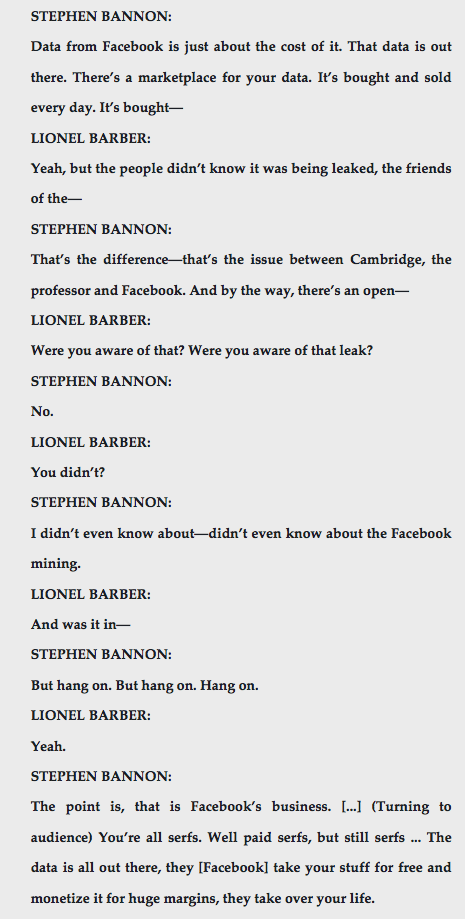
More recently, we have that exemplary “networker” Steve Bannon sifting tailings from the Cambridge Analytica strip mine:

FACEBOOK USER ENHANCING THEIR SHADOW PROFILE
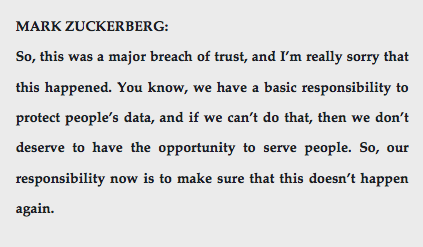
Not to worry, because “Zuck” is sorry for stealing your subjectivity after tricking you into commodifying every quirk and foible from your most private self:

TWO UNPAID MINERS PUSH AND PULL THEIR PRIVATE IDENTITY TO MARKET
Gentle DP reader: We suggest that you treat Mr. Zuckerberg’s disingenuous apology with a degree of skepticism, and STRIKE the FB Data Mine until you are amply compensated for the sale of your self, over and over again.

IT WOULD BE SO COOL TO PAY MY MINERS NOTHING WHILE CONVINCING THEM THEY ARE THE ONES GETTING SOMETHING FOR NOTHING

DELETE FACEBOOK STRIKE THE MINE DELETE FACEBOOK
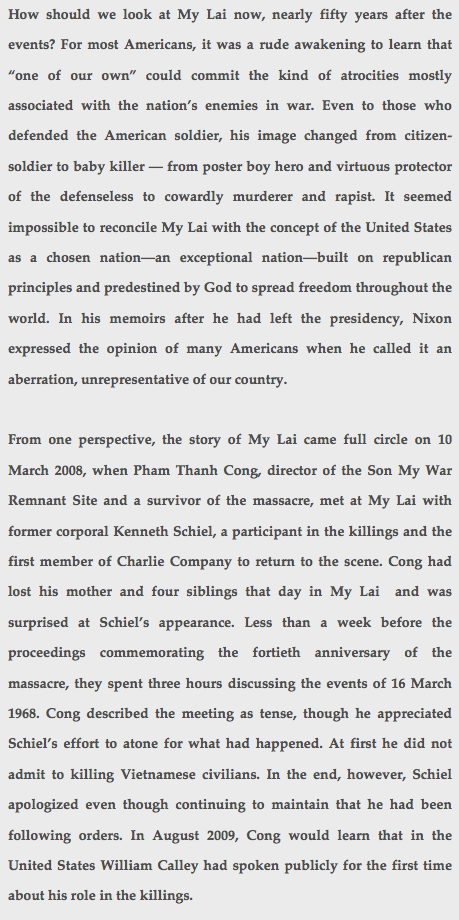
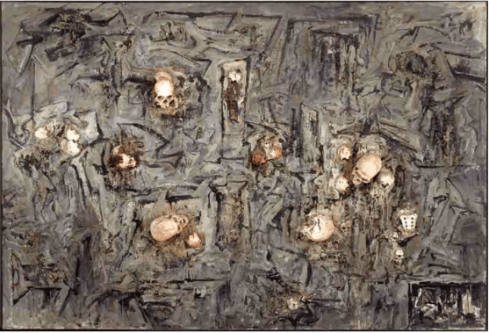
On this, the fiftieth anniversary of the massacre at My Lai, we turn to historian Howard Jones, with an excerpt from My Lai: Vietnam, 1968, and the Descent into Darkness. Jones places the massacre in the context of American exceptionalism: our exceptional disposition towards atrocity. The second image is a 1968 assemblage with skulls titled My Lai, by Hans Burkhardt.


A VERITABLE SYSTEM OF SUFFERING

˜˜˜˜˜
We also urge consideration of an exceptional film, The Sound of the Violin in My Lai, available in its entirety at the website of the equally as exceptional Madison Quakers.

˜˜˜˜˜

 Desperado Philosophy