
ANY QUESTIONS?
We make no comment on (and will not see) the latest attempt to tap into the goldmine of the killing of Osama Bin Laden, as expressed in the movie Zero Dark Thirty. We have spent the past year examining very closely the genesis of “enhanced” interrogation; it is unlikely that Ms. Bigelow and Mr. Boal have conjured anything fresh to add to this enquiry. Nonetheless, we did take note of a script fragment as represented in the trailer, in which one of the characters – a specialist in the application of enhanced techniques – says:

≈≈≈≈≈
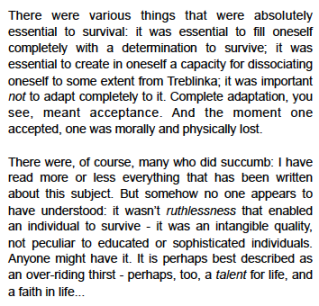
In her masterful (peerless) examination of the conscience of Franz Stangl, Gitta Sereny dialogues at length with Treblinka survivor Richard Glazer, who tells her:
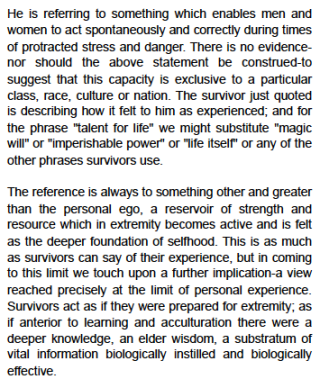
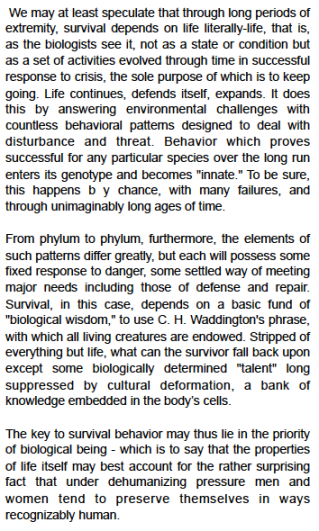
Terrence Des Pres further explores this idea in his pioneering study The Survivor, written not long after Sereny’s journey into the darkest corners of the consciousness that sustained Treblinka:

EMBEDDED WISDOM
A TALENT FOR LIFE
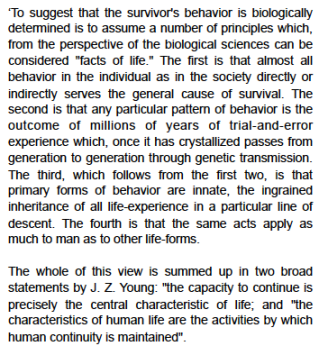
Torture, particularly the sort of “no touch” torture that has been refined and polished in the course of the past ten years during the so-called war on terror, is designed to mangle and destroy that “bank of knowledge embedded in the body’s cells”. As such, the real function of places like the facility at Guantanamo Bay is to serve as a sort of laboratory for the breaking of life itself – not just individual lives, but the deeper rhythms of biological survival.
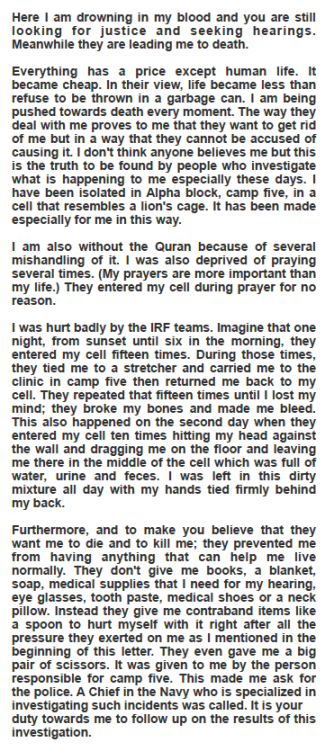
Consider the case of Adnan Latif. There is considerable evidence that suggests that Mr.Latif was not a militant fanatic engaged in violent acts but rather an innocent young man suffering from a brain injury suffered in a near fatal car accident, who by sheer bad fortune was opportunistically sold to the Gitmo Life Breaking Lab as a research animal. In the final desperate communication to his lawyers, he writes:

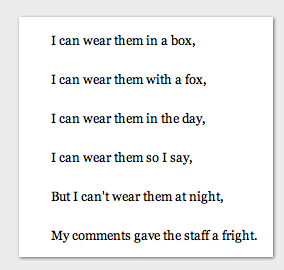
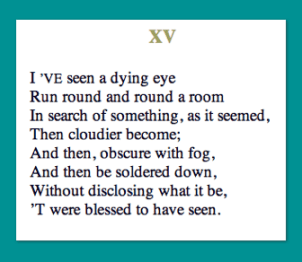
POEMS FROM INSIDE THE LAB

Mr. Latif intuitively grasps the true meaning of his suffering, that the assault on his own person – through a regime of drugs and humiliating Gitmo Torture Lab protocols and medical “treatments”- was nothing less than an assault on life itself. In the end, his talent for life, so evident in his struggle to recover from his brain injury, was crushed by the life breakers.

IN THE END








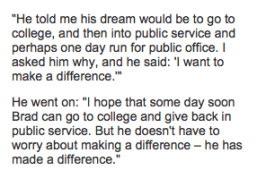


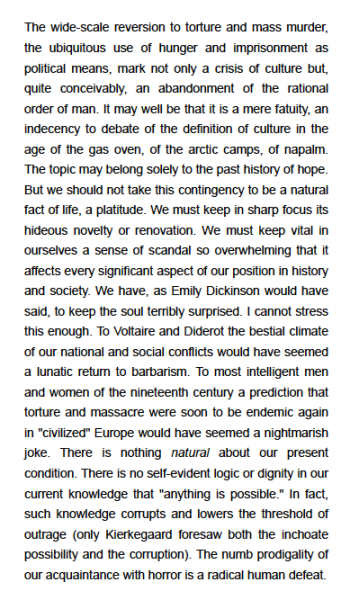
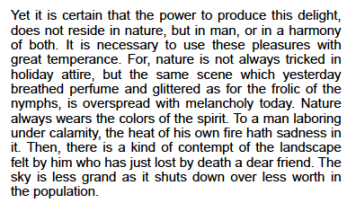
 The reference to Jaspers descends from his often overlooked Way to Wisdom, published in 1951:
 We have enormous respect for Karen Armstrong, not only for her lucid navigations through world religions, but also for her most beautiful idea of all: the





































 We are grateful for Mr. Strawser’s clarification, and we certainly agree that the primary discussion must be whether or not the mission is just, a discussion yet to be convened in any public forum. Why is this? Who benefits from this silence?




 Desperado Philosophy