Category Archives: bearings

Zenith of Cruelty

Last Friday saw the release of Alfred Woodfox from the infamous Angola penitentiary, after serving four decades in solitary confinement. Here is Woodfox’s former fellow inmate Walter Rideau, writing in an essay for Mother Jones magazine: “Having spent 12 years like that, I’ll tell you: Life in the vacuum of a cell is spirit-killing, mind-altering, and the zenith in human cruelty. That Woodfox and others like him have survived their experience mentally and emotionally intact is nothing short of miraculous because an isolation cell is designed to break you.”

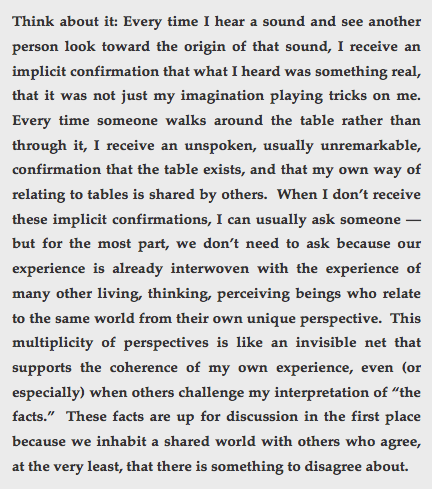
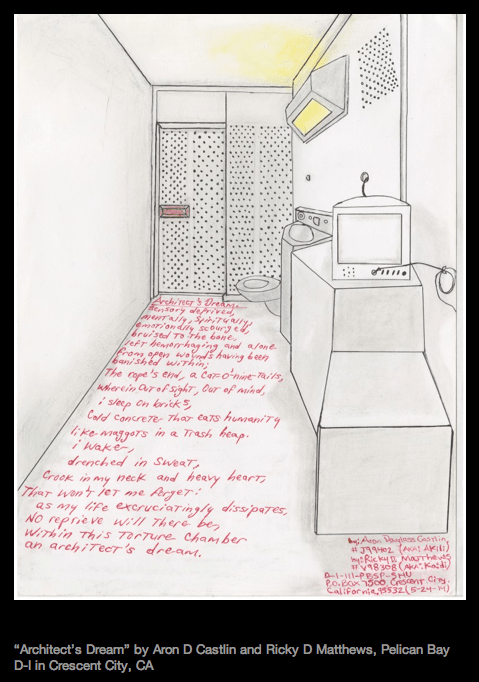
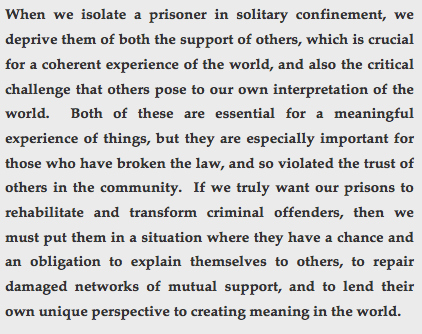
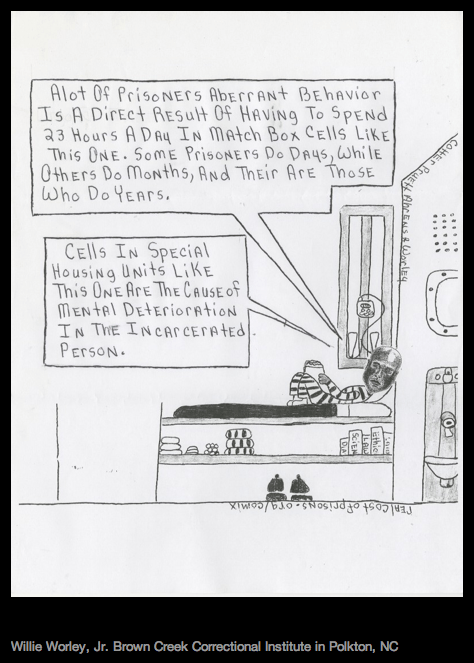
Lisa Guenther, summarizing her excellent book Solitary Confinement: Social Death and Its Afterlives, expands on how this breakage unfolds. The images are from a special exhibition sponsored by Architects/Designers/Planners for Social Responsibility, exploring the relationship between architecture and human rights.

lg2

arch2

lg3

esp1

lg4

˜˜˜˜

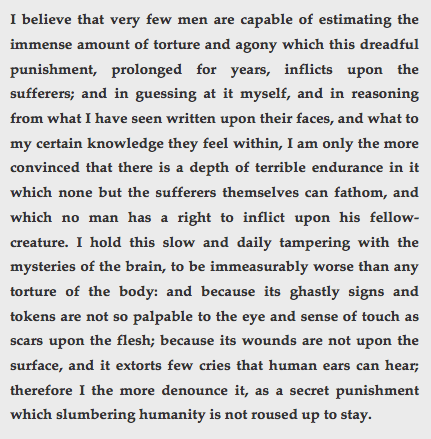
Way back in 1842, after a visit to the panopticon-penitentiary in Philadelphia, Charles Dickens took note of the silent cruelty inflicted upon inmates inside the regime of total isolation, and its ghastly signs and tokens:
cd2

Though the prison itself may be in ruins, the ideas that it once so perfectly expressed within architectural space remain very much alive. The evidence of severe psychological damage is overwhelming; not acting in the fact of such evidence raises the question as to whether our grotesque regime of incarceration actually applauds such devastation to the mind and soul as a job well done.

We leave the last words to Albert Woodfox: “You go through this psychological self-analysis and then you start talking to yourself, telling yourself that you are strong enough. Just trying to push these walls back and the ceiling back with the force of mind.”

 

Unknown

A FORMER PLACE OF SECRET PUNISHMENT

Bird Loss Heart Attack

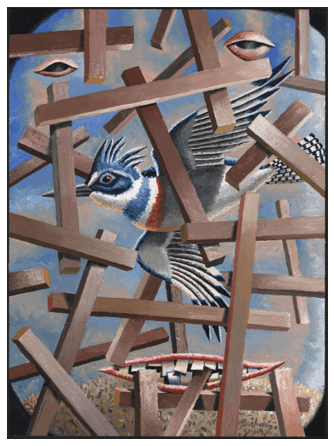
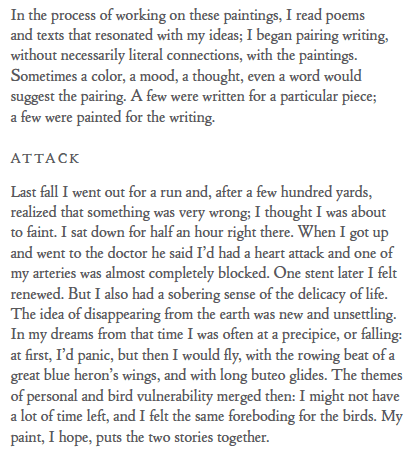
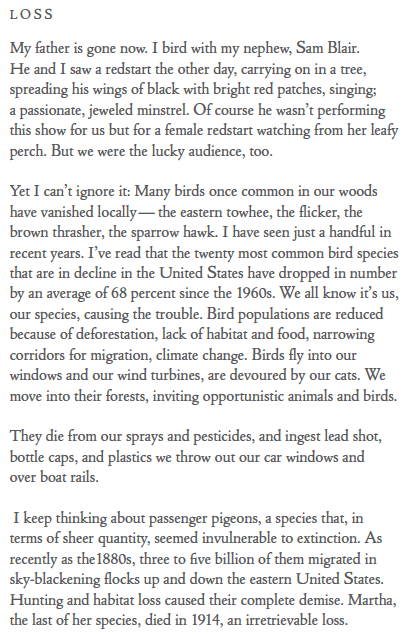
Now comes artist Morgan Bulkeley with a book that includes both recent paintings and a selection of bird-themed poems from a wide diversity of writers including Lydia Davis, W.S. Merwin, Farid Al-Din Attar, Pablo Neruda and Elizabeth Kolbert.

Below follows the opening essay, based on an interview with Bulkeley, and a flight of three paintings. “I am not aiming at what Fuertes was after, perching birds in gorgeous landscapes. I am setting birds in turmoil and danger, the way I feel it, in irrational, clamorous, chaotic human-scapes.”

We are bibliophiles here at DP, and deeply appreciate the quality of the book itself: cloth bound, sewn, and with the paintings beautifully reproduced on quality paper. From an exceptional artist, an exceptional book, to which we give our highest recommendation.

emby1

blha1

emby2

blha2

emby3

blha4

emby4


blhamb


Under Wraps Perhaps

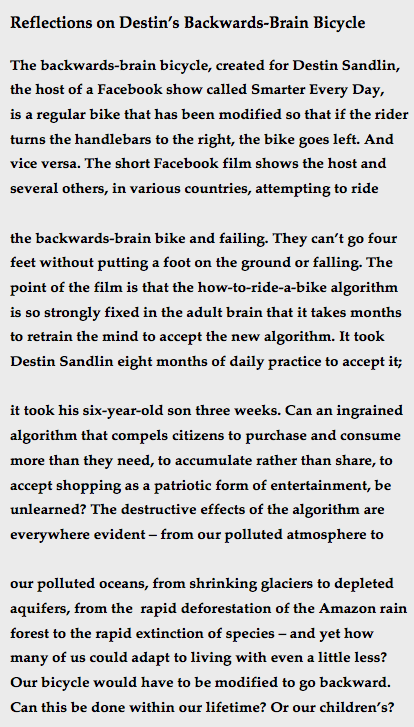
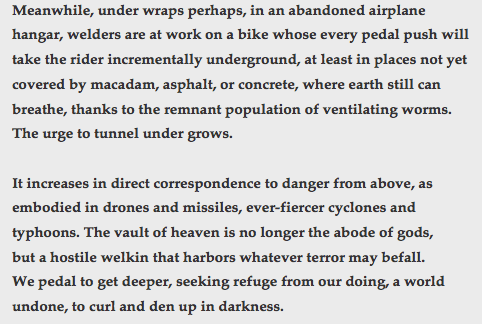
Now comes corresponding poet Jon Swan with a a few reflections on our most entrenched habits of thought and behavior, by way of an individual named Destin Sandlin who apparently aspires to be smarter every day. His video demonstration of the backwards-brain bicycle has received over twelve million views, which we suppose fits the definition of having “gone viral”.

The images are by Andrew Krieger, whose quietly subversive dispatches from the mysterious Deep Ellum we shall be exploring more thoroughly in a future post.

js1


Square Wheel Study (Aggressive), 2006

SQUARE WHEEL STUDY (AGGRESSIVE), 2006


js2


Square Wheel Bike Repair Platform in Deep Ellum, 2006

SQUARE WHEEL BIKE REPAIR PLATFORM IN DEEP ELLUM, 2006


js3


Of Spotigy and Buri

In the wake of our brief excursion into the slaughterhouse sensorium, we received correspondence steering us to a December report in the Sacramento Bee, uncritically lauding the advent of a brave new chapter in the dark annals of livestock management and the eventual transformation of cattle into beef.

The untitled images of well-horned creatures were bred from the imagination of Michel Nedjar.

sacbee

ned2


Here is an explanation of gene editing from the horse’s mouth, that is, the researcher referenced in the article: Alison Van Eenennaam.

ave

ned1


When scientists begin to talk about intervening in millions of years of evolutionary biology as comparable to word processing, as we cut and paste out way into eternity, DP begins to think humans have descended so far into the chasm between techne and ethos that there is surely no way out.

How soon before the word processor is applied to ourselves, in pursuit of obedience, efficiency and order, achieving safety for the masters of the universe, such that they will not be gored by an unruly stampede?

In the comments to the newspaper report, we were relieved to find the below sting from a Wooly Bee:

Screen Shot 2016-02-05 at 11.14.23 AM

Repulsive and reprehensible indeed; no, this will not end well.


The Slaughterhouse Sensorium

With Lori Gruen’s proposal for “entangled empathy” still fresh in our minds, we turn to the way humans actually “treat” other sentient beings, through their violent transformation into consumer-ready meat.

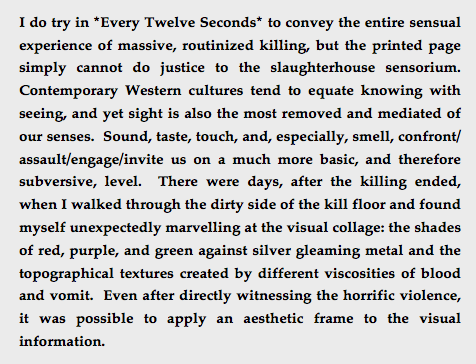
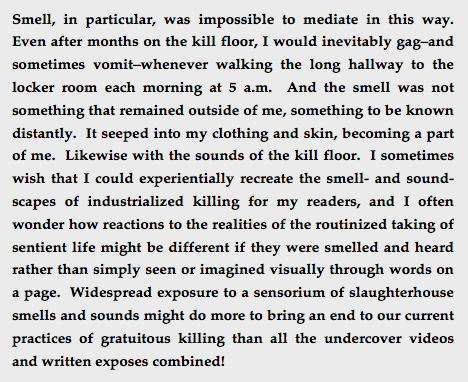
In Every Twelve Seconds, anthropologist Timothy Pachirat provides an unflinching, meticulously detailed account of his experience working inside a slaughterhouse; we are passing the book from hand to hand here at DP, and urge your close consideration.

For now, we provide a few brief excerpts from Pachirat’s interview with the honorable blogger James McWilliams, author of other essential books about our treatment of animals, such as A Revolution in Eating: How the Quest for Food Shaped America.

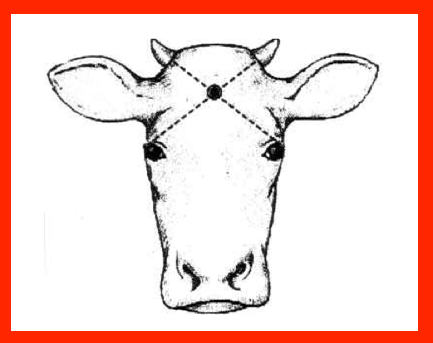
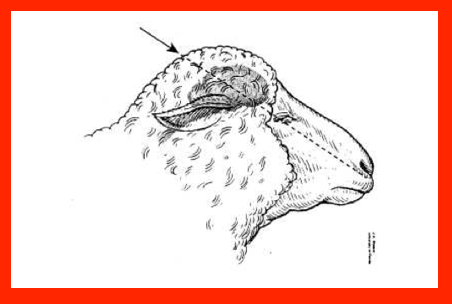
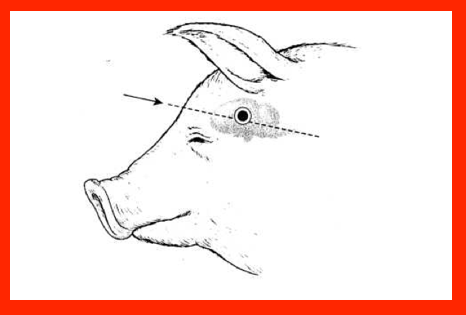
The images are from a manual of recommended practices for the processing of meat, as endorsed by Temple Grandin. On to the testimony of Pachirat, in response to questions from McWilliams:

tp1

kill1

tp2

kill2

tp3

kill3

tp4

˜˜˜˜˜˜˜˜

More information on the Woodstock Farm Animal Sanctuary is available here; a visit, highly recommended. Also recommended, a brief visit to a previous DP bearing on the map of 2012, Wrestling With Modernity.


Entangled Empathy

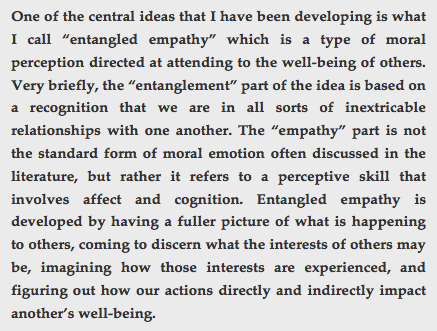
Now comes philosopher and ethicist Lori Gruen, and her powerful idea of “entangled empathy”, regarding various ethical dimensions of human relationships with other sentient beings.

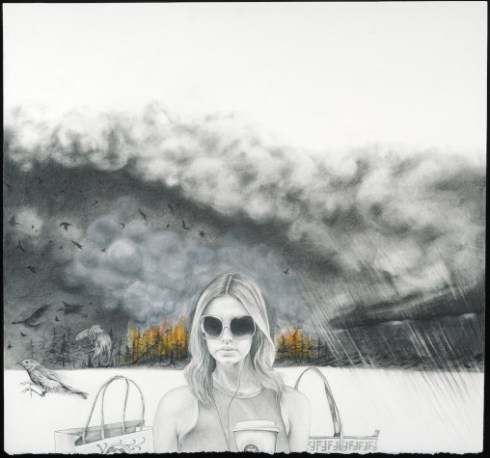
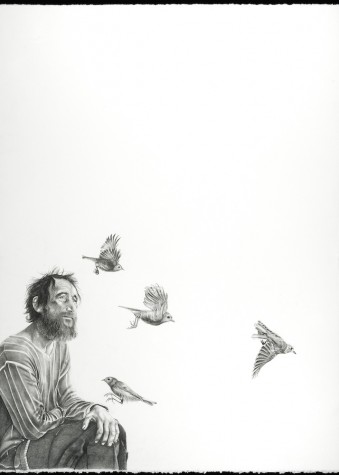
In an interview dating from 2014, excerpted below, Gruen provides a brief summary for ideas more fully explored in Entangled Empathy: An Alternative Ethic for Our Relationships with Animals.  The images are by Rebecca Clark, whose magnificent body of work might well be seen as an extended empathic entanglement with the wholeness of life.

LG1

OBLIVION, 2012

OBLIVION, 2012

LG

ST. FRANCIS IN THE AGE OF THE 6TH MASS EXTINCTION

ST. FRANCIS IN THE AGE OF THE 6TH MASS EXTINCTION

LG3

˜˜˜˜˜

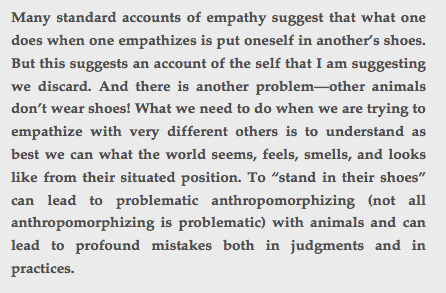
Finally, a brief excerpt from the book, regarding the life-world of “very different others”:

LG4


Children of the Mist

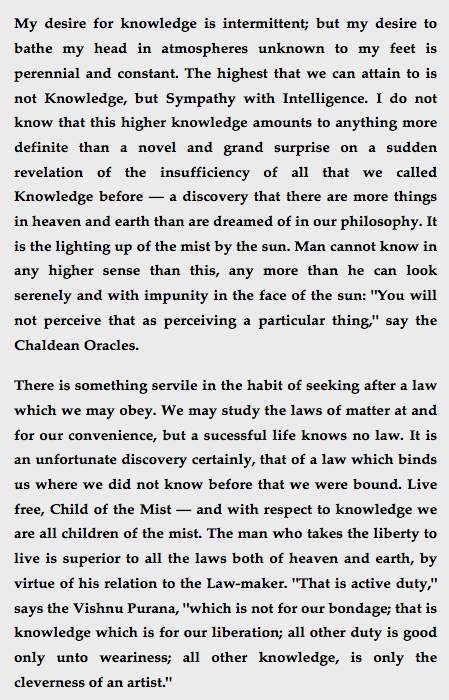
Here at DP, we have been re-reading Gary Snyder’s Practice of the Wild, a collection of essays dating from 1990, yet vividly of-the-present. In “Tawny Grammar”, he writes:

tawngram


The reference to “wild and dusky knowledge” descends from Thoreau’s essay Walking. Later in the same essay, Thoreau writes:


chilmist


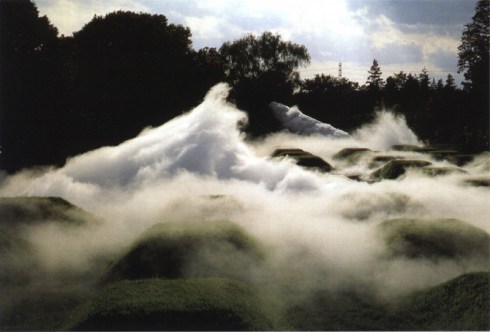
FUJIKO NAKAYA: FOGGY FOREST

FUJIKO NAKAYA: FOGGY FOREST


Returning to Snyder, here are the final lines from his poem, Endless Streams and Mountains:


gs


CHILDREN OF THE MIST

CHILDREN OF THE MIST TIP THE MOIST BLACK LINE


History and Garbage

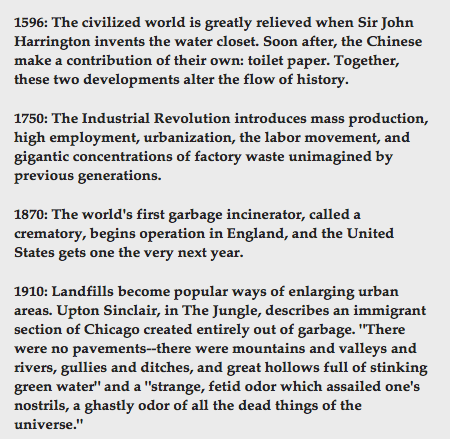
While poking around in the history of recycling in search of philosophical grist, we came across an engaging and concise history of garbage buried in a back issue of the Chicago Reader. The timeline stops in 1988; for an update, one needs only to wander along a winter beach after the tide goes out.

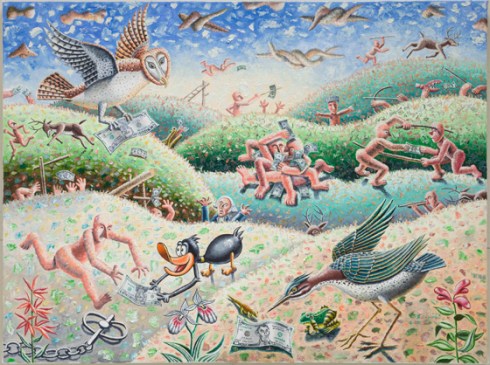
Images are paintings by Morgan Bulkeley, with his keen understanding of the wafer-thin line that separates human utopia from the town dump.

gar1

mb1

gar2

mb2

gar3

mb3

gar4

˜˜˜˜˜˜˜˜˜

beach_trash2

UPDATE FOR 21ST CENTURY


Between Their Time and Ours

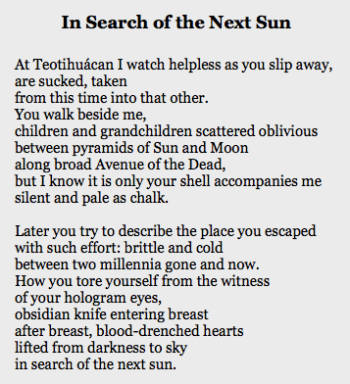
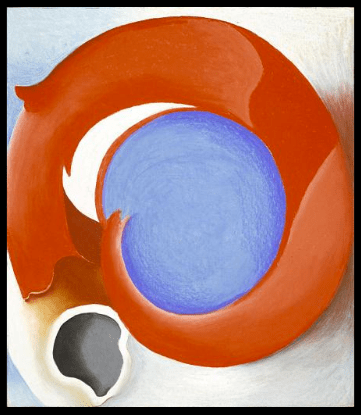
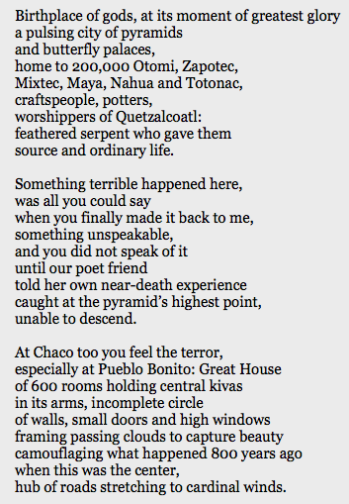
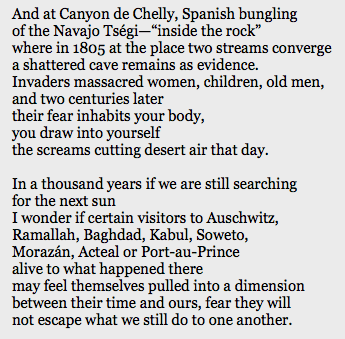
On this first day of the year 2016 and as a first bearing on a fresh DP map, we offer a poem by Margaret Randall, with images by Georgia O’Keefe:

mr1

gok1

GOAT’S HORN WITH RED

mr2

gok2

PELVIS SERIES – RED WITH YELLOW

mr3

˜˜˜˜˜˜˜˜˜

Onwards into the fog……..


Towards Light and Heat

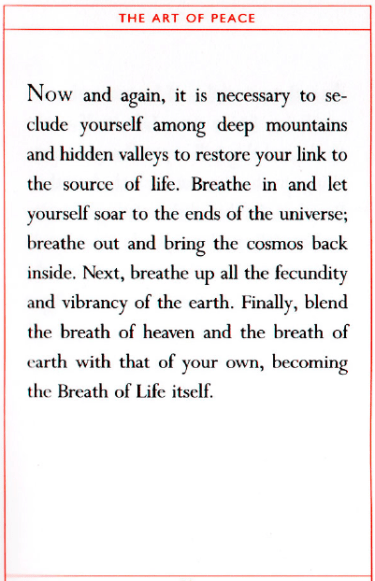
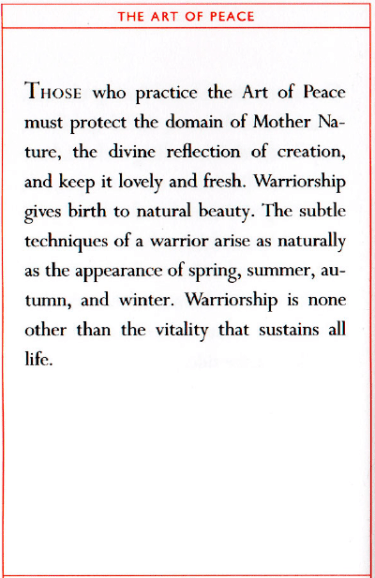
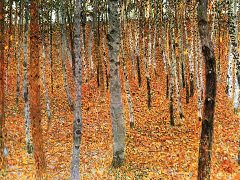
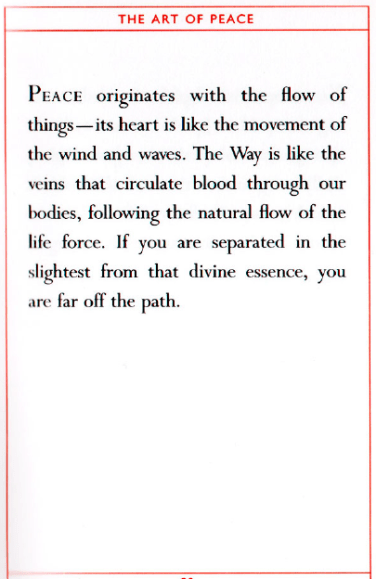
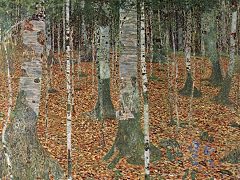
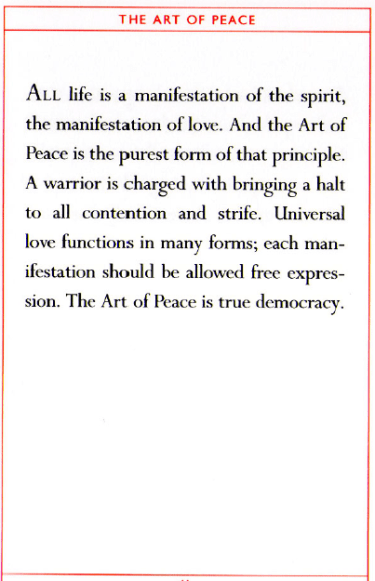
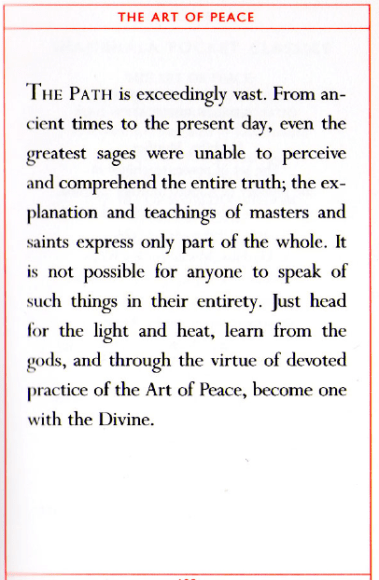
As our final bearing along the rather blood-smeared map of 2015, we offer a few pages from The Art of Peace, by Morihei Usheiba, together with two images from the forests of Gustav Klimt. May peace be with all readers of DP from around the globe, as we move towards a new year with fresh breath for life itself.

aop1

aop2

Birch-Forest

aop3

Beech-Forest

aop4

aop5