Author Archives: DP

Even the Robots Are Dead

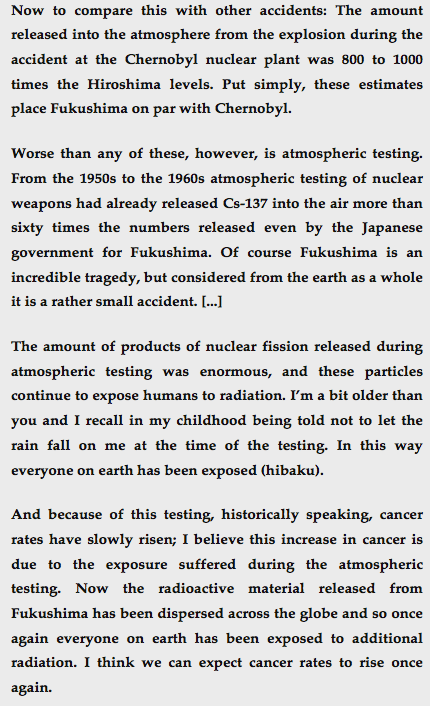
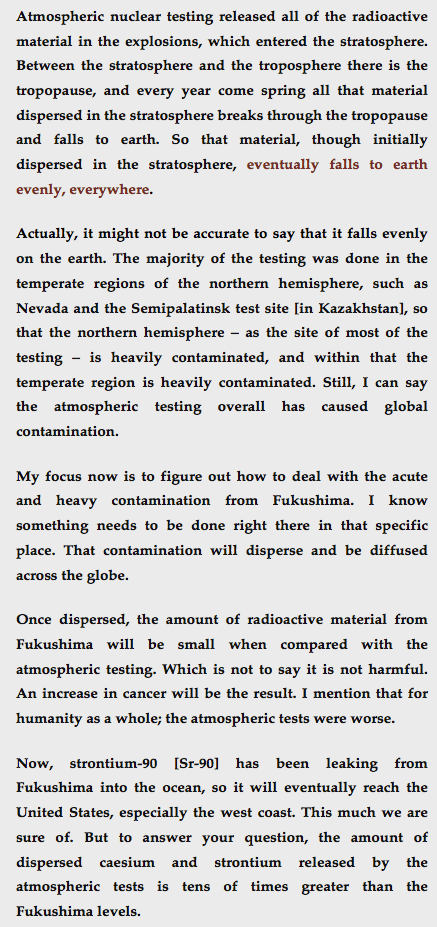
It appears that even robots sent into the Dead Zone at Fukishima have a limited life expectancy, in the vicinity of three hours. Seeking more detailed information about longterm biological/genetic effects of the accident on humans and other life forms, we came across a fascinating interview with Koide Hiroaki, a nuclear engineer who for has argued tirelessly for the abolition of all nuclear power plants in Japan, and elsewhere.

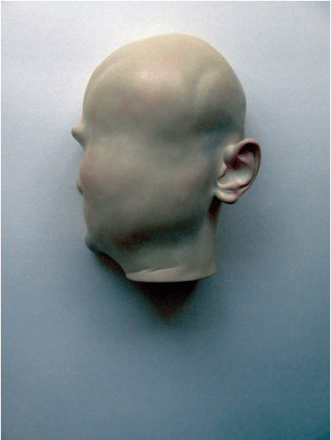
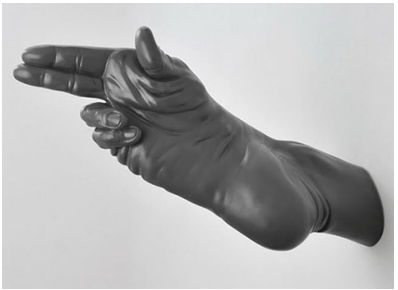
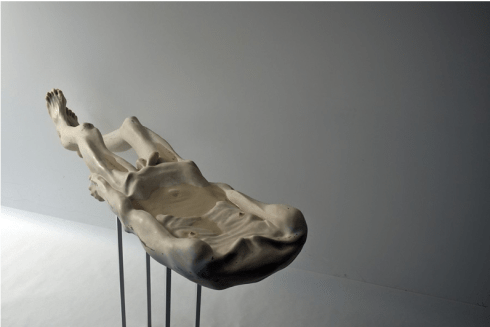
The entire interview, which roams widely through the toxic ethical, political and scientific vapors that envelop Fukishima, is worthy of close consideration. Below, we offer a montage of excerpts, with images added by DP: Bogdan Rata’s vivid exploration of possible shapes for future neo-humanoid mutations.

f1

BR2

f2

BR1

f3

BR

f4

BR4

f5

BR5

f6


The Humbling

Now come our friends at the Dark Mountain Project with a new issue that resonates strongly with one of our main themes here at DP: that humans are not the zenith of biological evolution, and that we are surely not the “inviolable sovereign” of this earth, let alone the universe. We excerpt the excellent editorial introduction below as an invitation to explore the vibrant and deeply human offerings assembled within the volume.

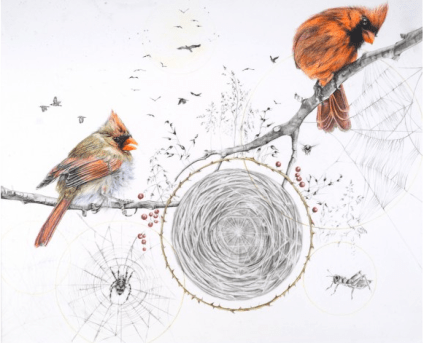
The images are from the hand of Rebecca Clark, whose exquisite drawings are featured in the issue, and whose work we have long admired.

h1 h2 h3

WORLDS WITHOUT END, 2015

WORLDS WITHOUT END, 2015

h2

OCTOPUS, 2015

OCTOPUS, 2015

h3

Let us search for that thread, and let us weave a future away from the hideous tapestry of unfettered grandiosity, narcissism and delusion.


Nuit Debout

The state of exception described by Giorgio Agamben requires mass obedience and learned helplessness, such that individual and collective agency dissipates into passive consumption of mindless diversions and junk culture. Yet as the vampiric politics and economics of neoliberalism reach obscene levels of exclusion, incarceration, inequality and greed, increasing numbers of people refuse to accept the precarity imposed by the state, whether in the name of austerity or national security.

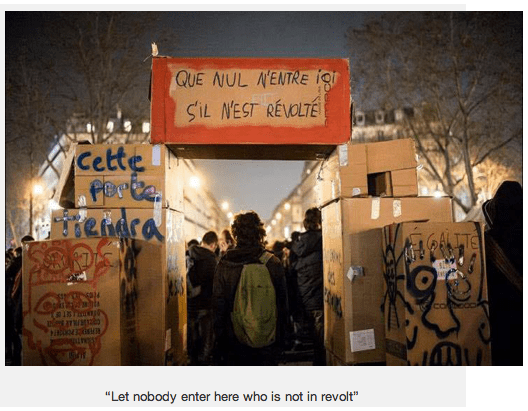
In France, this refusal has taken shape (or shapelessness!) beneath the banner of Nuit Debout, or Up All Night.

nd2

ndmanif

nd1


Among the assortment of voices assembled recently by the Guardian, our ears were particularly struck by the testimony of a young Belgian student, Elie:

ndelie


The powers that be are terrified by the idea of an entire generation simply “opting out” of the neo-lberal paradigm, which was after all intended to represent the end of history. Every minute of autonomy will leave its “mark in the mind”, as Elie so astutely notes. From those mind-marks, her generation may find the beginnings of an alternative future, free from the self-serving permanent emergency of the parasite class.


Screen Shot 2016-04-13 at 1.34.11 PM


As Ciphers Drift

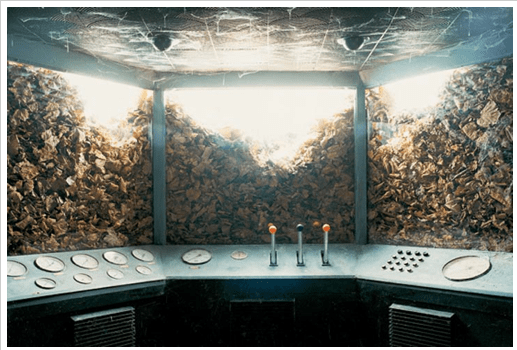
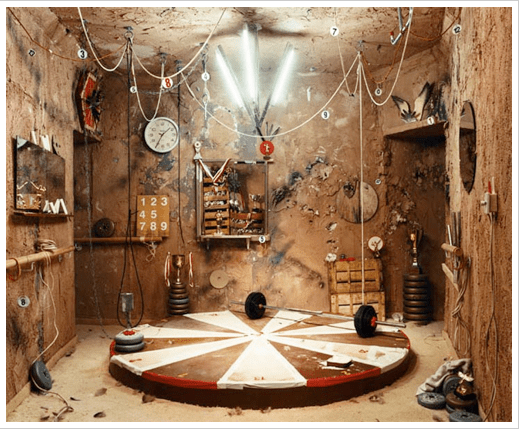
In the midst of our ongoing research into the roots of political degeneracy in both Europe and the US, we stumbled across a 2012 interview with Giorgio Agamben, excerpted below. The images are from Anne Hardy.

ga1

ANNE HARDY, DRIFT (2007)

DRIFT

ga2

CIPHER

CIPHER


The Great Exsanguination

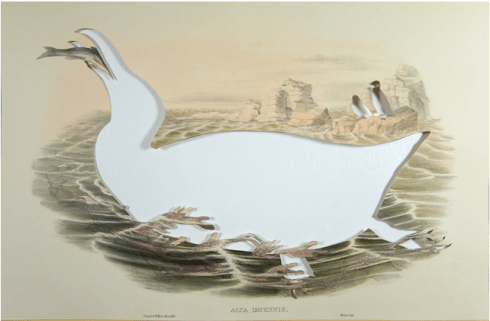
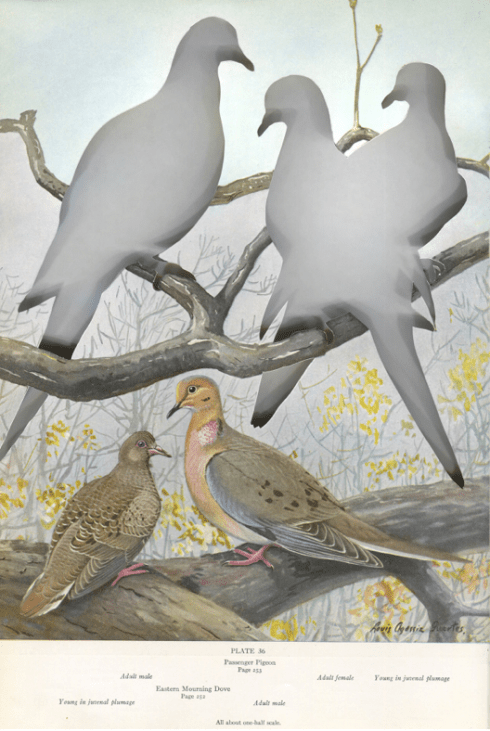
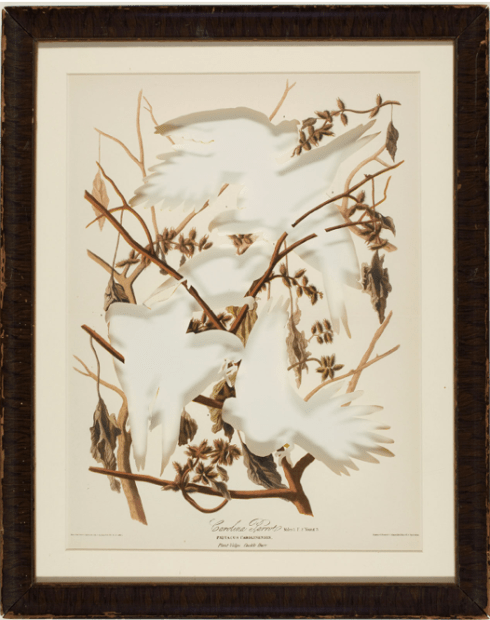
Now come Derrick Jensen and Lierre Keith, with an Open Letter to reclaim environmentalism from Big Green and the conservation-industrial complex. Images are from Brandon Ballengée’s Frameworks of Absence.

dj1

bb1

dj2

bb2

dj3

bb3

dj4

dres


Strange and Sacred Noise

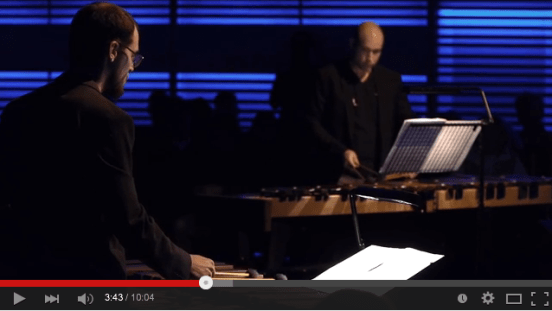
Now comes composer John Luther Adams (not to be confused with the John Adams of Shaker Loops, etc.), with two selections from his extraordinary strange and sacred noise.

We have long admired Adams’ compositions, that draw inspiration from the rhythms and resonances within the natural world. In his notes for the composition, he writes:

jadams2

ssn1

STRANGE AND SACRED NOISE         PART I

jadams3

STRANGE AND SACRED NOISE PART IV

STRANGE AND SACRED NOISE         PART IV

jadams4

˜˜˜˜˜

In an interview elsewhere, Adams states:

My work is not activism. It is art. As an artist, my primary responsibility must be to my art as art—and yet, it’s impossible for me to regard my life as a composer as separate from my life as a thinking human being and a citizen of the earth. Our survival as a species depends on a fundamental change of our way of being in the world. If my music can inspire people to listen more deeply to this miraculous world we inhabit, then I will have done what I can as a composer to help us navigate this perilous era of our own creation.

For me, it all begins with listening.


Empty the Tanks

Regarding the recent announcement by the cetacean incarceration corporation known as SeaWorld, that they would no longer breed Orcas in captivity, we urge careful consideration of a response made by Paul Watson, excerpted below:

For 30 years, Tilikum has been committed to an asylum of despair and deprivation.

For years we have clung to a hope that once again he might feel the embrace of the living sea. We maintained hope that a shred of decency would arise within the cold corporate heart of SeaWorld and that they would grant Tilikum, the one gift he most desired and deserved. Freedom! That hope is now all but gone. Tilikum is dying.

The recent announcement by SeaWorld that Tilikum is nearing the end of his tragic life was spun with a major lie.

“Despite the best care available, like all aging animals, he battles chronic health issues that are taking a greater toll as he ages,” SeaWorld said on its website.

Tilikum is 35 years old who should be in the prime of his life. Orca males live an average of 70 years in the wild and females can surpass a century. SeaWorld wants us all to believe that Tilikum is dying a natural death from old age.

This statement is a deliberate lie crafted by the public relations team at SeaWorld. Tilikum’s life has been one of tragic abuse ever since he was torn from his family pod in 1981 at the age of two. As they hauled him from the water and brought him onboard, his pod were visibly disturbed. His mother followed in the wake of the fleeing boat and she continued to follow helplessly as her baby cried piteously until she could hear nothing more. The capture boat sped away leaving Tilikum’s family pod and mother behind. He would never see them again.  […]

During the 19th century asylums for the criminally insane and even the not so criminally insane were institutions that the general public knew little about. Behind guarded walls, humans were punished and deprived of food as a form of behavior modification. Electro-shock therapy and lobotomies were used with great frequency and the patients were primarily exploited like laboratory rats for the purpose of investigating, understanding and manipulation of human behavior. In some cases these institutions offered tours where for a price, members of the public could gawk at inmates restrained in strait jackets, chained to their beds or given electro shock therapy. Captives were sometimes marketed as entertainment like those poor individuals featured in freak shows.

The modern socially acceptable freak show is the aquatic asylum where for a price the public can gawk at one of the world’s most intelligent and strongest sentient beings and feel superior as the Orcas are forced to perform tricks for their amusement. It really is not much different than feeling superior while watching another human convulsing as electricity fries part of his brain. These monstrous institutions were gradually shut down but I remember participating in an anti-lobotomy demonstration on the Berkley campus in 1977, so it was not that long ago.

Such institutions of horror, pain, and death are not abolished overnight. It takes time, patience, courage and commitment to tear down such walls. We have been fighting to empty the tanks in aquatic asylums like Sea World for decades and just like the movement to tear down the asylums for humans, we have been ignored for many years. But once that formidable door is forced open, enlightenment quickly illuminates the consciousness of society and progressive change begins to happen.

Our years of battering at the doors of such places as SeaWorld with demonstrations, articles, petitions, and lawsuits weakened the fortress doors enough that when Blackfish was shown to the public it was like a battering ram of enlightenment. When I look back over the years, I see that we have made steady progress in bringing the abuses of these asylums to the eyes of the public.

The first captive Orca named Moby Doll was actually deliberately shot when it was captured for the Vancouver Aquarium back in 1964. The Vancouver Aquarium purchased a second Orca in 1967 named Skana. I came to know Skana quite well primarily because my biology professor was the wife of the curator of the Vancouver Aquarium, Dr. Murray Newman. In the early days of marine aquariums, not much thought was given to conservation. I still remember the Aquarium selling sperm whale teeth for $5 each that came from the whaling operations on Vancouver Island. When I spoke out against whaling to staff at the Aquarium they looked at me like I was crazy. There was not a shred of empathy for the animals they were displaying for profit. […]

We won’t be able to save Tilikum and many of the other abused inmates of the aquatic asylums but we do have an ever growing movement that will prevent new victims being snatched from their families and committed to the horrors that places like Sea World represent.

It’s been a long time since Skana was captured off British Columbia and Tilikum was torn from his mother’s side off Iceland. It’s much more difficult now to do live captures and even breeding operations have been discouraged like the recent decision of the California Coastal Commission to oppose the Sea World’s breeding program in San Diego. Most recently, SeaWorld announced the end of all captive breeding in their parks.

The movement to free captive Orcas and other dolphin species gets stronger every year. But there is still much to do before we can say we have delivered justice for Tilikum and the hundreds of Orcas that have been enslaved and killed simply to entertain humans for profit.

The tanks must be emptied and if possible the captives released, at least to large open sea pens where they will not be forced to perform for the amusement of human beings. Sea World is a façade, pretending to be educational, pretending to care for the intelligent sentient creatures their facilities holds captive. Humanity does not need Sea World or these other aquatic Asylums anymore. We have evolved as a society and we need to recognize that there is an alternative to Sea World and that alternative is the real sea world, the place where Orcas and dolphins are free to be what they are, free to roam the sea with their own kind, free to communicate without their voices rebounding from concrete walls, free to not be tormented and not sexually molested by being masturbated by humans to harvest their sperm, freed from the abusive slavery that we have subjected them to for so many decades.

Like the 19th century asylums for insane humans, these aquatic asylums need to be closed and their facilities abandoned so that only the haunting cries of Orcas will echo from tanks drained of water amidst the ruins of something that we are coming to realize has brought ignoble shame to our entire species.

Screen Shot 2016-03-18 at 2.09.01 PM

CLOSE THE ASYLUMS 


How It Happens

As we observe the ongoing disintegration of American politics into a putrescent septic field, we have been re-reading They Thought They Were Free, Milton Mayer’s grim oral history excavation of German social psychology between 1933 and 1945, in which he charts the ways in which a population slowly capitulates to genocide and depravity.

Conversation by conversation, we convince ourselves that things are not as bad as they seem. Then one day, those few who are still able to string a few coherent thoughts together come to a sudden recognition that things are in fact much worse.

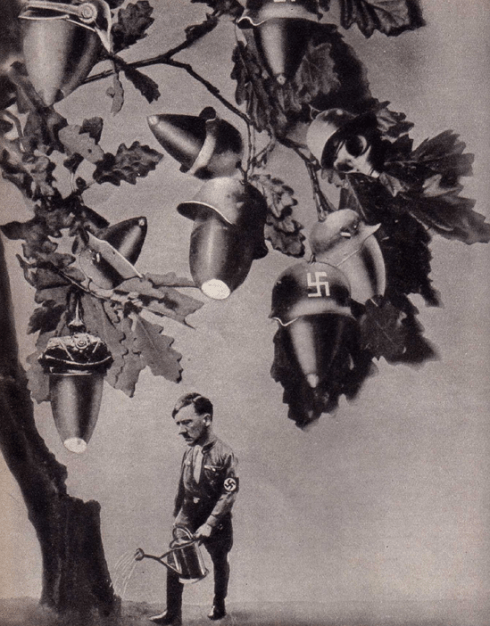
An excerpt below, with images added by DP: photomontages by the brave and brilliant John Heartfield, forced into exile by the rise of the Third Reich.

mayer1


THE GERMAN OAK TREE

THE GERMAN OAK TREE

mayer2

THE HOUSE THAT HITLER BUILT

THE HOUSE THAT HITLER BUILT

mayer3


Let Us Wake Up

CONSCIENCE-SHAKER AND RIVER GUARDIAN, BERTA CÁCERES

CONSCIENCE-SHAKER AND RIVER GUARDIAN,              BERTA CÁCERES

We write today with sadness and outrage at the brutal murder of Honduran indigenous and environmental activist, in her own home.

A leading organizer for indigenous land rights in Honduras, Cáceres co-founded the National Council of Popular and Indigenous Organizations of Honduras, or COPINH. For many years, the group has faced violent reprisals for the brave and unflinching defense of their land and rivers against corporate and governmental incursion and exploitation.

Last year, Cáceres won a Goldman Environmental Prize, the world’s leading environmental award. Below her acceptance speech; in a few carefully chosen and deeply felt words, she articulates the single most urgent issue of our time, and how we must respond.

bc


Zenith of Cruelty

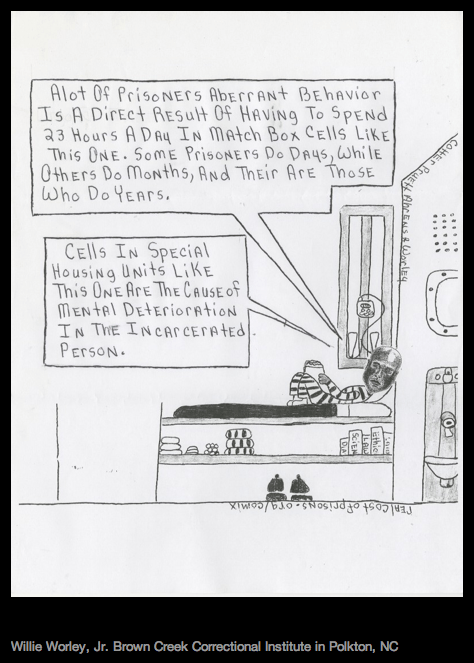
Last Friday saw the release of Alfred Woodfox from the infamous Angola penitentiary, after serving four decades in solitary confinement. Here is Woodfox’s former fellow inmate Walter Rideau, writing in an essay for Mother Jones magazine: “Having spent 12 years like that, I’ll tell you: Life in the vacuum of a cell is spirit-killing, mind-altering, and the zenith in human cruelty. That Woodfox and others like him have survived their experience mentally and emotionally intact is nothing short of miraculous because an isolation cell is designed to break you.”

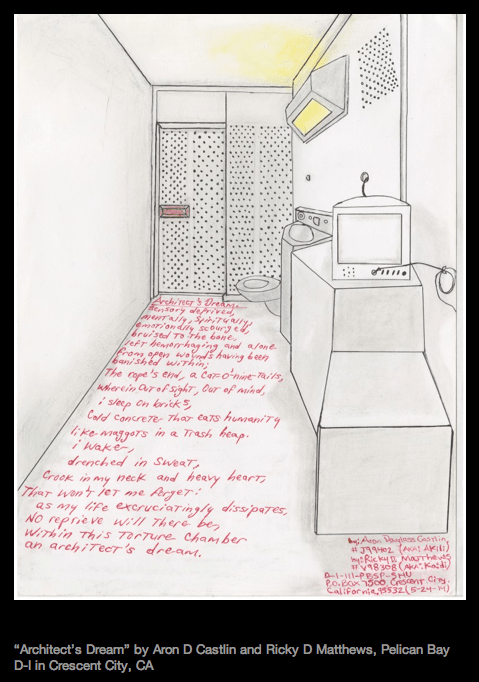
Lisa Guenther, summarizing her excellent book Solitary Confinement: Social Death and Its Afterlives, expands on how this breakage unfolds. The images are from a special exhibition sponsored by Architects/Designers/Planners for Social Responsibility, exploring the relationship between architecture and human rights.

lg2

arch2

lg3

esp1

lg4

˜˜˜˜

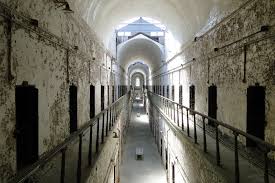
Way back in 1842, after a visit to the panopticon-penitentiary in Philadelphia, Charles Dickens took note of the silent cruelty inflicted upon inmates inside the regime of total isolation, and its ghastly signs and tokens:

cd2

Though the prison itself may be in ruins, the ideas that it once so perfectly expressed within architectural space remain very much alive. The evidence of severe psychological damage is overwhelming; not acting in the fact of such evidence raises the question as to whether our grotesque regime of incarceration actually applauds such devastation to the mind and soul as a job well done.

We leave the last words to Albert Woodfox: “You go through this psychological self-analysis and then you start talking to yourself, telling yourself that you are strong enough. Just trying to push these walls back and the ceiling back with the force of mind.”


Unknown

A FORMER PLACE OF SECRET PUNISHMENT