Here at DP, we retain a special fondness for the medium of radio, no matter how often it may be dragged into the mud puddles of reactionary blather. We also retain a special fondness for those precious few stubbornly creative radiomakers who, against all odds, continue to explore the strange poetics of radio space through performance and (re)composition.
Enter the brilliant, soulful soundings of Anna Friz, most recently casting forth her vivid, gentle yet deeply provocative Radiotelegraph, in transmissive concert with Jeff Kolar’s indispensable Radius platform :
WHO’S THERE?
˜˜˜˜˜
DP What was the genesis of your residency at the Skaftfell Center in Iceland; how did you conceive the idea for this broadcast? Can you briefly describe the telegraphic history, dating to 1906?
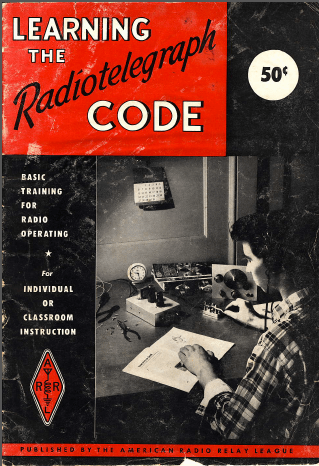
Anna Friz I applied for the Skaftfell residency in the summer of 2012, knowing only that I needed a break from urban life in the south, and that I had more methodological than thematic concerns in mind. Specifically, I was interested to deepen a creative engagement with place, to see how new work could spring from cultivating daily practices or habits, and to stay away from all talk of deliverables and known outcomes. This broadcast germinated very gradually in the months leading up to my arrival in Iceland: I was invited by Jeff Kolar at Radius to make a new work, and it seemed that would be a perfect fit to my time in a little art shack on the east coast of Iceland. This summer I picked up an ARRL (American Radio Relay League) 1957 training manual for “Learning the Radiotelegraph Code”, and determined one of my new habits would be to work on verbal morse code. A little more research revealed that Seyðisfjörður was the site of the first trans-oceanic telegraph cable connection between Iceland and Europe in 1906. The line was then expanded across Iceland to 14,000 telephone poles, so telegraph and telephone were carried in tandem across the island, voice and morse. The call letters were TFY (TF for Iceland, Y for Seyðisfjörður). There is an excellent Technical Museum of East Iceland here in town, which has functional models of the telegraph machines used for years at the station. As in many places, telegraph operations offered opportunities for women to work as well, and the job of operator held some prestige as an essential service requiring rigorous training.
DP What are the sources for the actual coded text?
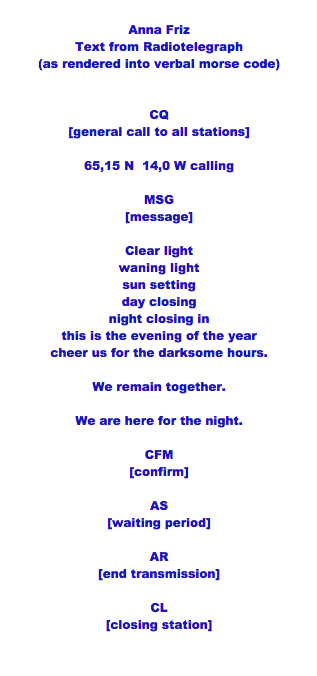
AF The text refers to the daily loss of light after the solstice, and is a little inspired by reading translations of Icelandic sagas, where a lot of collective action, for good or for ill, takes place after nightfall. I was also aware of the text needing to speak to two very different geographic circumstances, that of this northern village on the edge of the Arctic Circle and the huge metropolis of Chicago further south, but for it not to be a warning. The beacon tells that long nights are coming, but we will not be alone. It’s the basic promise and premise of a signal, however faulty, asking and declaring: who’s there? I am here.
I AM HERE
DP Here, and yet not here; and that ambiguity is something you have embraced throughout much of your work. Even when the voice is “real”, there is a fictive vibe in the air, and that’s where the play begins.
AF Yes, from early pieces about the ‘little people in the radio’ to more recent radio plays, I tend to make a familiar voice ambiguous by blurring the circumstances of its origin and placement. Here by doing verbal morse code I hope to blur the roles of operator and machine, while I’ve tried to introduce a more organic sensibility into the landscape of signals and oscillators in which I’ve set the morse code beacon. How far is far away, in space and time? The lovely thing about radio is that a voice can be so present and so unknown at the same time.
DP From a performance perspective, how did you train/shape your voice to emulate the telegraph so persuasively, in rhythms and pulsed consistency– what were those rehearsals like? I love how you manage to capture both the “personality” of the machine while also retaining a strong sense of your own voice, your own persona.
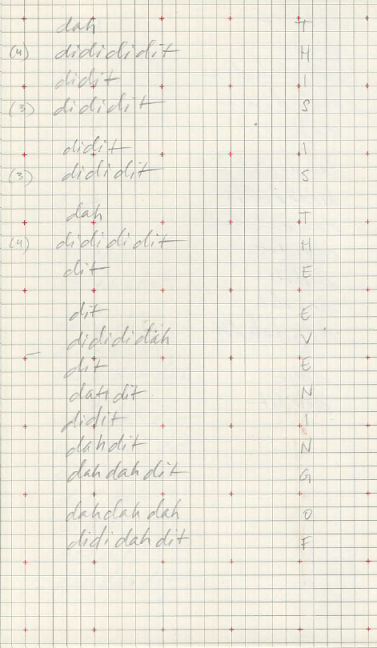
AF I have previously made work around the subject of the first wireless transmissions of the human voice by Reginald Fessenden (“Somewhere a voice is calling”, created with Peter Courtemanche aka Absolute Value of Noise, 2006-7), and part of that process included voicing a sloppy little bit of spoken morse code. I’ve always wanted to revisit verbal morse code, and coming here to Iceland I had some ambitious idea of becoming fluent in morse in two months. Turns out radiotelegraph operators trained longer and harder than that, so my ambitions were quickly replaced with respect for the signal operators of yore. Instead of fluency I focused on training my voice for morse delivery–developing a vocal ‘fist’ as it were. The goal is not to think of the individual letters so much as syllables and words. Beginning with the letters E (dit) and T (dah), practically every character is composed through combining other characters, so each character must have its own rhythm to be decipherable, and spaces between characters and words must be regular. All of this quickly turns into musical practice. The handbook recommended a metronome, but I just practiced combinations while out picking blueberries on the hillside.
Most importantly, I didn’t want my voice to turn into a machine, nor the telegraphy to be entirely usurped by the poetics of the voice. I recorded myself in a small empty room in order to harness the ambient reverb in service of making my ‘dits’ more precise, and my ‘dahs’ more smooth. You can hear the lightbulb popping the cold, my intake of breath, the room cutting in and out. The code is being generated some place by someone, it just can’t be seen.
SOME PLACE BY SOMEONE
DP You reference the use of “electronics and radio signals” – can you say a bit more about those sources, and how you selected them? At times, I imagine I hear mournful cetaceans in the mix — airborn whales, or? How much of the sound bed is composed, and how much randomly generated through the process itself?
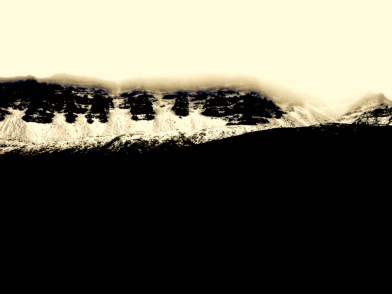
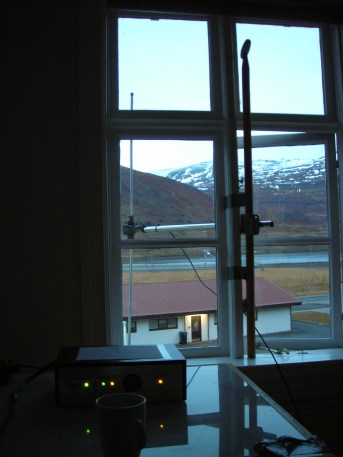
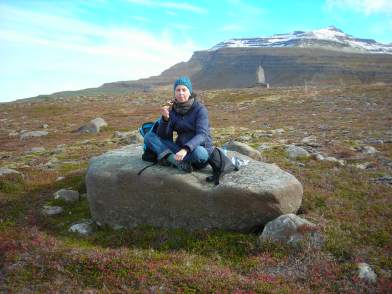
AF I do have an ongoing intention of making whale radio, so I’m pleased you mentioned cetaceans. The fjord here in Seyðisfjörður is narrow and deep, framed on each side by imposing if minimalist mountains. Wind and weather blow down the pass and out into the fjord, a small river flows past my window overlooking a massive hillside. These give the impression of both ceaseless movement and of timelessness. It’s easy to imagine a slower, deeper pace of communication as undertaken by giants mammalian or mountainous.
The electronic passages were created on my Tetrax, a cottage-built and very tactile electronic instrument designed by Ciat-Lonbarde in Baltimore. I created two parts on separate mornings in response to the landscape and the feeling here. The shortwave signals were recorded my first week here in a windstorm. The little bit of harmonica arrived last, once the voice parts were bedded down in their environment of composed and accidental signals. All of the parts were made separately from one another, and were placed together with very little adjustment at the end.
On air, broadcast on small transmitters, the composition is always nestled in a certain amount of ambient radio noise, little whispers and distortions. I know this environment well after years of experiments, so I try to keep things a little sparse to better work within these in situ circumstances.
DP Iceland is a highly aural/oral culture where specific spaces are very “vocal”, resonant with spirited vibes: in this piece, there is almost the sense of you mediating (as electropsychic medium?) the landscape, above all where the land meets the water.
AF The landscape is very resonant here, as the hills have their own particular acoustic properties underfoot as well as producing powerful echos around the fjord. As local rumour has it, there are a few special stones here that move across the fjord of their own volition, and emanate fields of influences on the town. There is an ineffable this-worldly magic about the place, which I was consciously heeding and improvising with.
DP The “twitchiness” of telegraphy survives inside the medium of radio, and is part of what makes radio so “hot”; the itchy finger that can pull the trigger or tickle the ribs. So much of your work has the very rare quality of both pulses, giving a sense that is both slightly ominous or even threatening, yet retaining a lovely almost delicate sense of vulnerability and humor.
AF Media can be actants in all sorts of events–quotidian, extraordinary, poetic, militaristic, sadistic. For radio this history is close to the skin, and morse code is a particularly fascinating example of just that. I always think of the mad mix of timpanists learning to imitate the style and ‘fist’ of enemy radiotelegraph operators during WWII after the Allies had cracked the Axis Enigma code, and so on. Music and murder, all in one. The last telegram was sent in India this year, so perhaps its a fitting time to continue to employ morse code to such gentle purposes.
MUSIC AND MURDER ALL IN ONE
DP I am intrigued by your notion of radio history as close to the skin — can you say more about that, and about the very carnal/corporeal nature of your radio poetics?
AF An ongoing point of interest and expression for me has been embodied intelligence, whether that be in the qualities of voice or gesture, or in the materiality of (often low fidelity) media such as radio stations detuned, or worn records, or walkie talkies exceeding the capacity of their small speakers. I’m surely influenced by my youthful feminist education, which resisted the notion of a mind/body split while validating the intelligence and practices of lived, embodied experience. I understand things and people to operate in a continuum in Hertzian space: radios themselves, like most simple electronics, are highly responsive to physical circumstances such as position, proximity, and atmosphere; bodies also. This sensitivity to fields of influence make radio and bodies delightful and corruptible.
DP As far as you know, was there a live audience for the broadcast in Iceland? What sort of response did you get? Feedback? And in Chicago? How has this residency changed or deepened your understanding of broadcast, and of the radiophonic voice?
AF I’m not sure who else is listening, aside from friends who contacted me. No real way to know. Sometimes it’s enough that people in an area know that there is intermittent pirate activity, as it makes them listen to the radio at other points with more curiosity, with the expectation that they could be surprised. My goal in Iceland was to find and nourish daily practice, so more than anything, undertaking the daily transmission at sundown has been a contemplative activity for me, to be aware of the fast fade of daylight here (losing 8 minutes a day); to sit still and notice the change in light each day, the enormous variations in ambience, mood, and weather. For instance, tonight is the final cast, and the entire sky is orange, brilliantly lit as the sunset behind the mountains ignites thin low clouds. It’s otherworldly, like the town is an outpost on another planet. The beacon sends back to busier climes, lone voice but not lonely.
ANNA FRIZ: EMBODIED INTELLIGENCE



































 Desperado Philosophy