Tag Archives: deep-sea mining

Deep Sea Mamae

The maori word “mamae” translates as pain, sore, hardship, ache; “mamae tahi” as pain together or condolences.

For many years, Trans Tasman Resources (TTR), an Australian mining company, has applied to mine iron sand off the coast of Taranaki, strenuously opposed by local iwi. Rukutai Watene (Taranaki), is one of the local leaders that have stood against TTR’s proposed project, strengthened by Tangaroa, spiritual guardian of the sea.

TTR initially receiving resource consent to extract iron ore from the seabed in 2017, yet this decision was challenged by local iwi in collaboration with other opponents, and eventually overturned by the High Court in 2018. In 2021, The New Zealand Supreme Court unanimously dismissed TTR’s appeal.

The company now hopes that the rightwing government’s recently approved fast-tracking consent bill will open a path for the infliction of severe environmental mamae. A video update, below:

___________
˜˜˜
In a recent report published by the Guardian, Rachel Arnott and Graham Young, representatives from a local iwi (Ngāti Ruanui) stressed that the land, sea and iwi are all inextricably linked: “We will be out there loud and proud – we will do whatever delay tactics we can do. Because it is not about me, or us, it’s about the future.”

˜˜˜˜˜˜˜


DSM Moratorium Now

Today, we simply relay a press release from Greenpeace highlighting an exciting scientific discovery that may well put an end to the omnicidal lunacy of deep sea mining, above all in the name of “green” tech.

A groundbreaking discovery has revealed that Metallic nodules found on the deep seabed in the Pacific ocean are a source of oxygen for nearby marine life. It’s a discovery that scientists say could challenge what we know about oxygen itself, and how life is created.

Greenpeace has long campaigned to stop deep sea mining from beginning in the Pacific due to the damage it could do to delicate, deep sea ecosystems, and says that this incredible discovery underlines the urgency of that call. 

Dr. Paul Johnston, from Greenpeace’s Science Unit, says, “This study shows that processes are going on in the deep sea and which are associated with these mineral nodules that we are only just becoming aware of. The ecological importance of this process as a source of oxygen in deep-sea environments is not really known but may be highly important. We should impose a moratorium on exploiting these systems because we still lack a comprehensive understanding not only of their biodiversity, but also of the complex ecological functions they support.” 

Greenpeace Aotearoa spokesperson Juressa Lee (Te Rarawa, Ngāpuhi, Rarotonga) says, “This incredible study demonstrates just how little we know about these deep sea ecosystems. The only sensible response is to halt wannabe deep sea miners like The Metals Company from unleashing their machines on the deep sea environment.”

Other scientists are joining in the call to protect the deep seabed from mining as the International Seabed Authority meets in Jamaica this week to decide the future of the deep sea mining industry. 

Prof Murray Roberts, a marine biologist from the University of Edinburgh says, “There’s already overwhelming evidence that strip mining deep-sea nodule fields will destroy ecosystems we barely understand. Because these fields cover such huge areas of our planet it would be crazy to press ahead with deep-sea mining knowing they may be a significant source of oxygen production.”

And study co-author Franz Geiger, said “..This puts a major asterisk onto strategies for sea-floor mining as ocean-floor faunal diversity in nodule-rich areas is higher than in the most diverse tropical rainforests.”


˜˜˜˜˜˜



Hungry Ghosts

As Eileen Crist brilliantly documented back in 2019, deep-sea mining is not only a grim prospect for the future; it is a reality in the present via exploratory permits and temporary leases, perversely spun as essential for the fabrication of “green tech.” Crist writes:

In case you have never heard the term “hungry ghosts,” they are archetypal beings with extremely narrow throats and obese bellies, so that no matter how much they eat they never get enough. Never enough. Forever hungry. “Always encroaching,” in the words of Native American Shawnee Chief Tecumseh.

To refer to the vast oceans on Mother Earth as “the common heritage of humankind” in the midst of an accelerating extinction event, together with a deepening climate emergency, represents human supremacism at its most omnicidal extreme. In that same essay, Crist goes on to write:


HUNGRY GHOSTS DEVOUR THEIR LAST MEAL

We stand with the Deep-Sea Conservation Coalition and others who say NO to the terminal meal of the Hungry Ghosts. 

˜˜˜˜˜


Forever Hungry

We are grateful to our colleagues at Rewilding Earth for publishing an excellent, detailed report on the threat of extensive deep-sea mining, written by Abundant Earth author Eileen Crist. The article includes an extensive bibliography, as well as the outlines of a non-extractive alternative way of connecting with seaborne earthlings and their magnificent habitat.

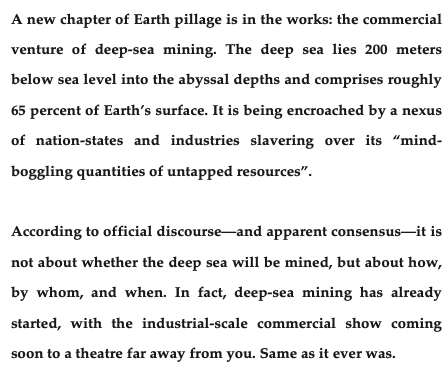
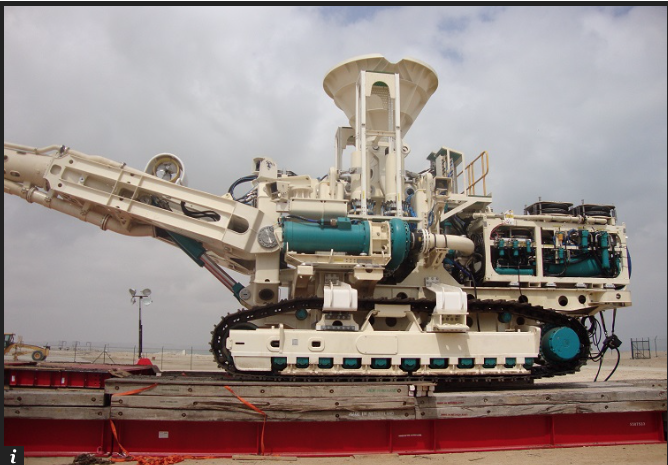
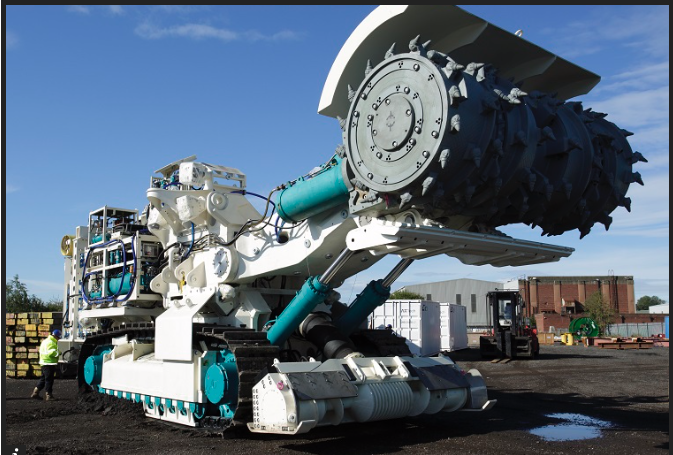
Brief excerpts below, together with a few images of hungry ghost maw-machines relayed from the website of a “pioneering” sea-mining corporation. They communicate the dark, indiscriminate and savage sort of supremacist violence that has become the signature of an extractive capitalism gone berserk, through an “always encroaching’ (see below) greed for plunder and profit.


˜˜˜˜˜