Tag Archives: inverted utopia

Sad By Design

Over the years, we have received countless enquiries as to why we are not “on” Facebook; and why do we not “weigh in” on X.

Now comes the voice of esteemed media theorist Geert Lovink with a few excerpts from an interview (worth perusing in its entirety) centering on his 2019 book, Sad By Design.

Read on:

In my book, Sad by Design, I contrast technologically induced sadness not just with the historical ‘illness’ melancholy but also with boredom, depression, loneliness and similar sombre mental states that are dominant today. We read a lot about ‘male’ anger, from trolling and shitstorms to cyber-warfare but less so about the regressive side. Emotional rides are no longer experienced in solitude; the virtual others are always there as well.

It is a truism that we are lonely together (a subtle but crucial variation of Sherry Turkle’s alone together). We cannot put the phone away — there is no relief. In my essay, I have tried to minimize the comparison between the current wave of technologically-induced sadness and the rich historical descriptions of melancholy. […] 

The predictable continuity thesis is not just elitist, it is escapist. It walks away from the dirty present, much in the same way romantics did in the industrial 19th century.

Techno temperaments generated by computer code and interface design (also known as nudging) causes overload and exhaustion and produces a gloomy state that flickers, without ever becoming dominant on the surface. Sadness today is an indifferent micro-feeling, a flat and mild state of affairs. This should be contrasted with the much heavier illnesses such as depression, stress and burn-out.

One or two centuries ago these would be labelled melancholia. Some artists make this an explicit topic of their work such as Lil Peep and Billie Eilish.

Sadness is no longer hidden and is becoming part of pop culture. Youngsters feel the anxiety, the stress, and become sad about empty promises and diminishing opportunities. They are experts at reading daily life through the sadness lens. This does not mean we should medicalize them. We are not sick.

How do we comfort the disturbed? Not by taking their phone away. What can we do that’s liberating and prevents moralism? […]

Right now, social media are either the domain of marketing or an object for (moralistic) concern of teachers, parents, politicians). Critical internet research is still a joke in terms of funding, schools, research programs. […]

Social reality (SR) is so much larger than hyped-up technologies such as virtual and artificial reality. SR is also am ironical hint to sociology, the discipline that so far has failed to contribute to a better understanding of the ‘social in social media’ as I called it in 2012 in e-flux, an essay I updated in Social Media Abyss.

I no longer believe there is some raw and truthful reality outside of the social worlds that tech companies have created.

Dichotomies such as online-offline and real-virtual are no longer meaningful. I like the idea of a social reality that people carry with them. Once they grab their phone and start swiping and scrolling through the updates on their ‘social’ apps they are in it again. You go on ‘social’, as the Italians say. Have you seen it on ‘social’, as the Italians say.

We need to re-invent the social, which is now technical and digital. I would not say it ‘affects’ us as such an understanding somehow suggests that we are outside, victims, subjects. The user perspective teaches us that we’re fully involved—by design—and constantly interact, contribute, upload, klick, respond, like, swipe, whatever. The extractive data machine lives of that.

[…]

Self-design can be a somewhat naïve term. The daily reality, in particular for young people, is a brutal one, in which the construction and maintenance of the self-image is a matter of life and death. We should not underestimate the internalized values of the neo-liberal precarious reality in which people are forced to compete with each other and life never quite succeeds.

There are always mishaps, fall-outs, missed opportunities, break-ups, strange downtimes in our mood, an endless period of boredom in which nothing seems to work. The self-image constantly breaks down, we get angry or depressed, can’t finish a deadline. This is all recorded and captured, processed and turned into data points that are added to our profile. Self-image is no longer a cute selfie, it has become much more complex and contradictory. […]

Silicon Valley has all but killed the speculative imaginary—and they are acutely aware of that. This was their aim. Not merely own it but shut it down by pulling it into the background. A growing movement is reclaiming the net but it’s an uphill battle.

It sounds weird but ‘another internet is possible’ has almost become a subversive slogan. If we want to overcome homo extractionist, we need to organize and fight, in visible manners, build and use those alternatives we desire so much! […]

Right now, there is hardly anyone working on the speculative re-design of the social. This space has been poisoned by the systems of likes, followers, updates, newsfeeds, ‘friends’ you name it. Let’s get rid of this jargon. However, we want to reinvent the social we need to acknowledge that we can no longer distinguish between the social and tech.

Forget offline romanticism. Secondly, we need to get rid of the Silicon Valley online presence inside our conversations, our lives. Let’s minimize the presence of third parties and focus in a pragmatic way on what needs to be done and what tools support this strategy.

No more invisible moderators, filters, censors. The algo ain’t no friend of mine. Alt.social will have to confront itself with various challenges: monetization and democratic decision making. Both aspects have been quietly removed from Silicon Valley’s agenda and their related start-up venture circles. For art and activism redistribution of the ‘wealth of the networks’ and collective decision making are essential. We need to dismantle the ‘free’ and invent new ways to work together and deal with difference and disputes.

We can no longer delegate the management of the world to these IT firms. Silicon Valley is part of the problem and we no longer expect them to resolve the growing tensions in the world.


True, all that, in 2019 — more deeply so in 2025!

˜˜˜˜˜


With A Heavy Head

Now comes artist Chavis Mármol with a collisionary assemblage that provides welcome insight into our fate as inverted Utopians


“The Olmec head imposes itself before the technological object, it bursts and crushes it and in the end it is glorified before this object, which no matter how technological or how much it is an object of desire, in the end it is just that, just a product of a capitalist system, when In reality what matters is what we came from, what we are and what we have been generation after generation.”


“What do I feel when I see that? What does Tesla mean to me? What does it mean that it is installing a plant in Monterrey? What does Musk generate among us?”


˜˜˜˜˜˜˜


Human Lasagna

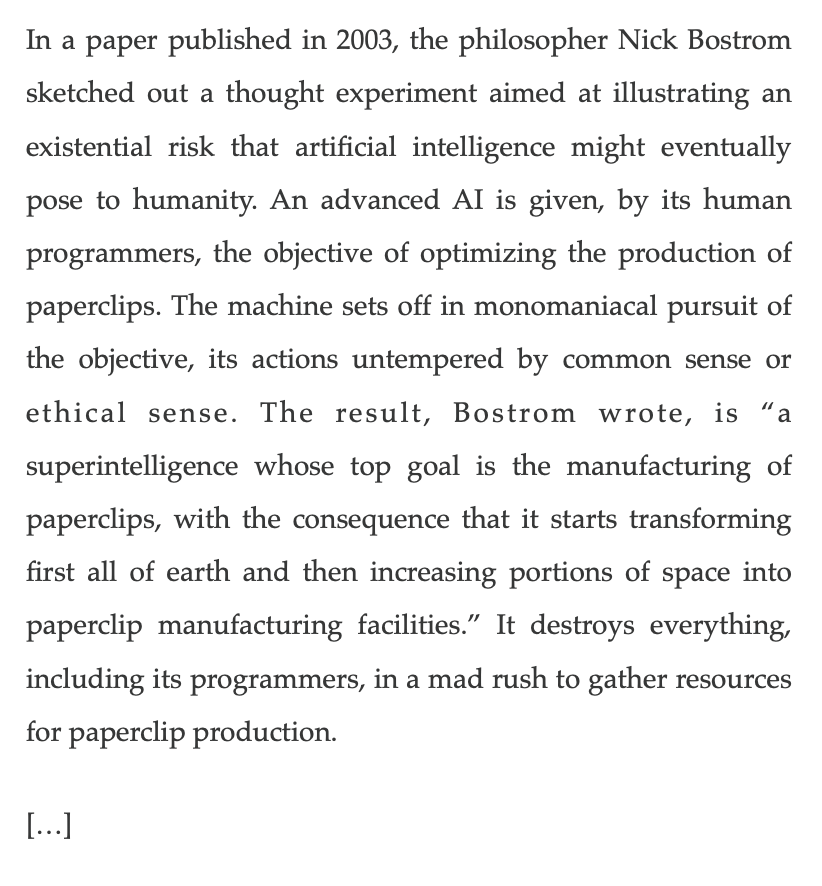
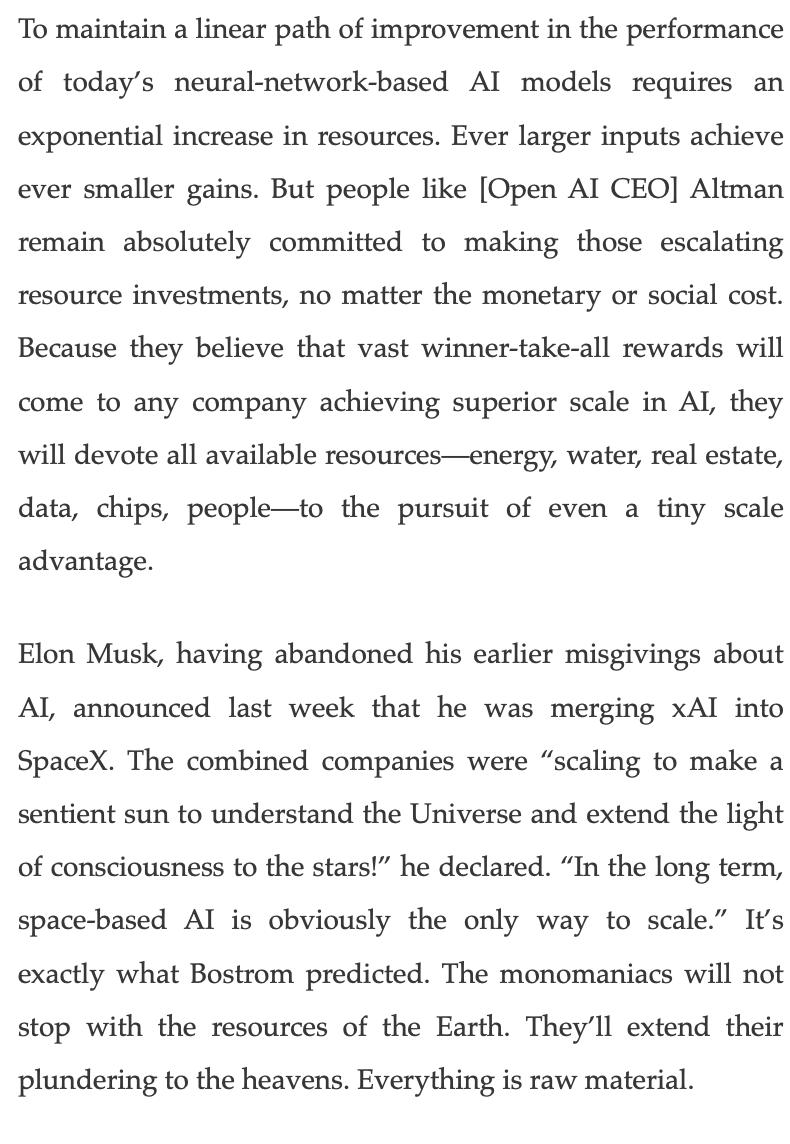
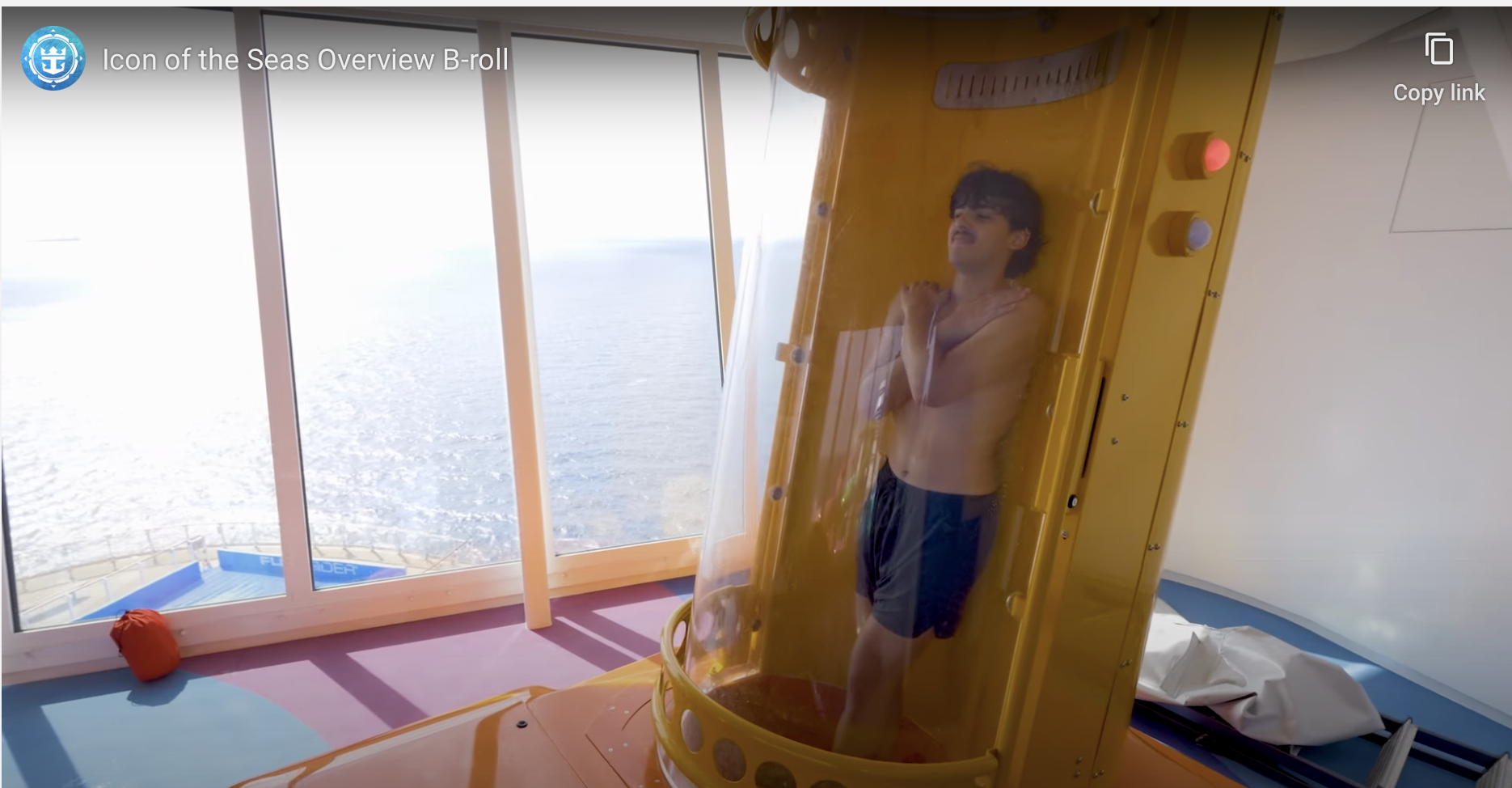
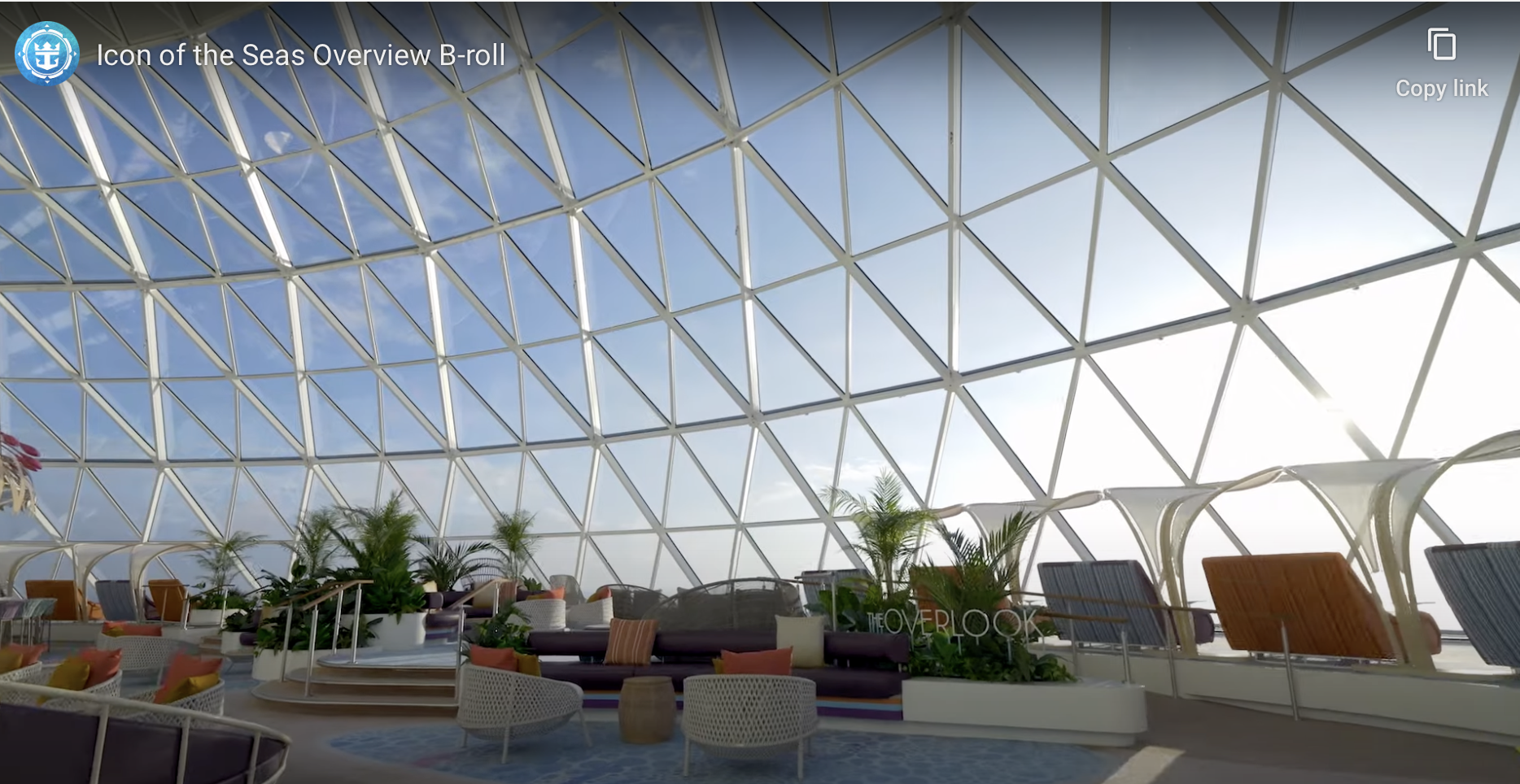
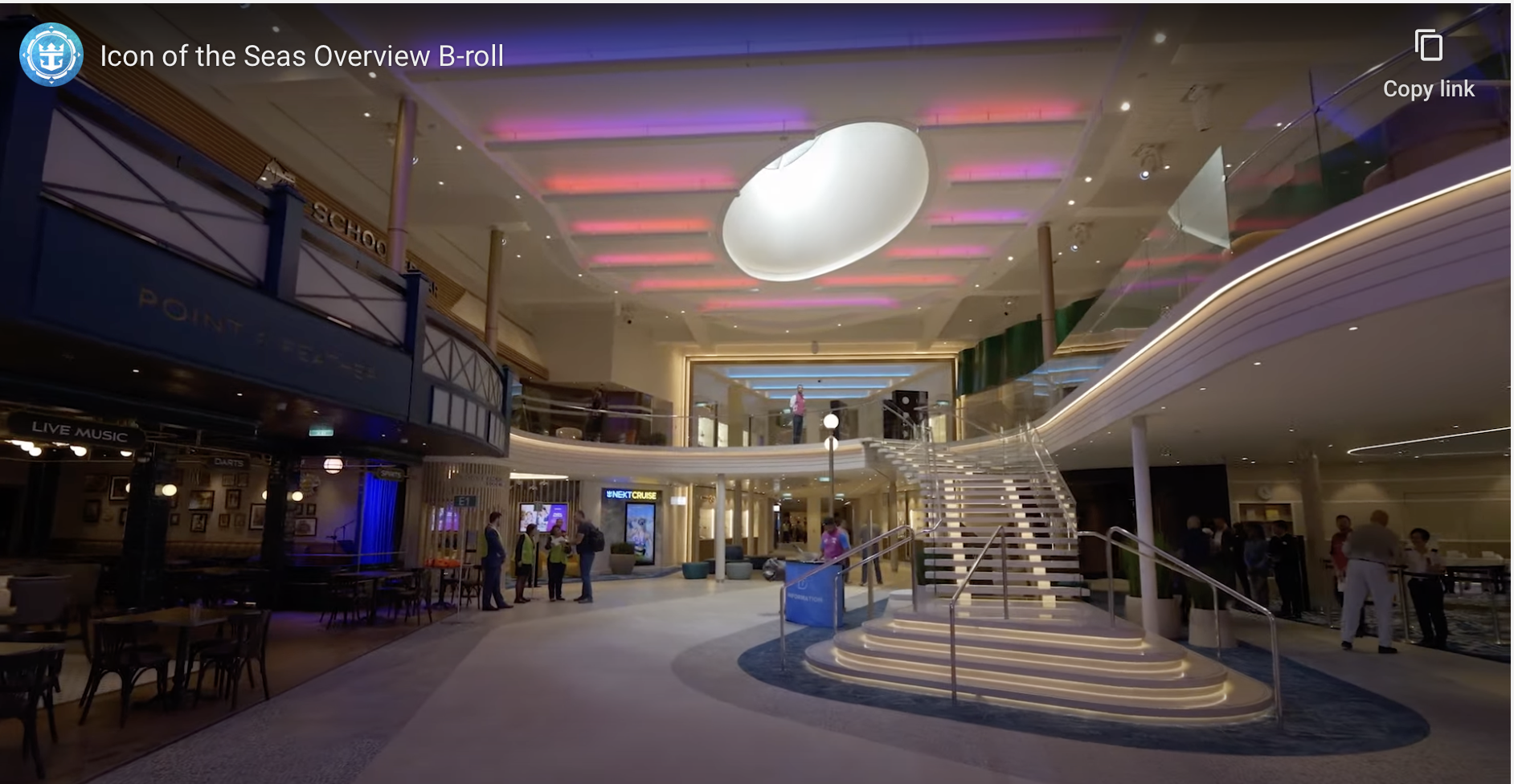
No, we are not referencing the village of cannibals among The Walking Dead, but rather the world’s most recent spasm of human supremacist oblivion, being a bloated vessel christened by “iconic” genius of global footie Leo Messi, here transmuted into a feckless shill for commercial whatevs; a megametamaxi casserole of kitsch launched (perversely) as “Icon of the Seas.” Below, a few images from the promo video; captions added by DP.


MOTHER OCEAN NOT WELCOME INSIDE THIS STORY


ICON OF THE ME, ME & ME: STICK A FORK IN IT


PASSENGER PREPARES TO BE FLUSHED


SO MUCH PASTA REQUIRES A LENGTHY DIGESTIVE TRACT


BAKE FOR TWO WEEKS AT 350 DEGREES FAHRENHEIT AND THEN PROCEED TO THE VOMITORIUM


APPARENT SIMULACRUM OF A GHOST MALL IN PARAMUS NEW JERSEY INVADED BY A HOVERCRAFT IN THE SHAPE OF A SUPPOSITORY.

Bon voyage!

˜˜˜˜˜˜


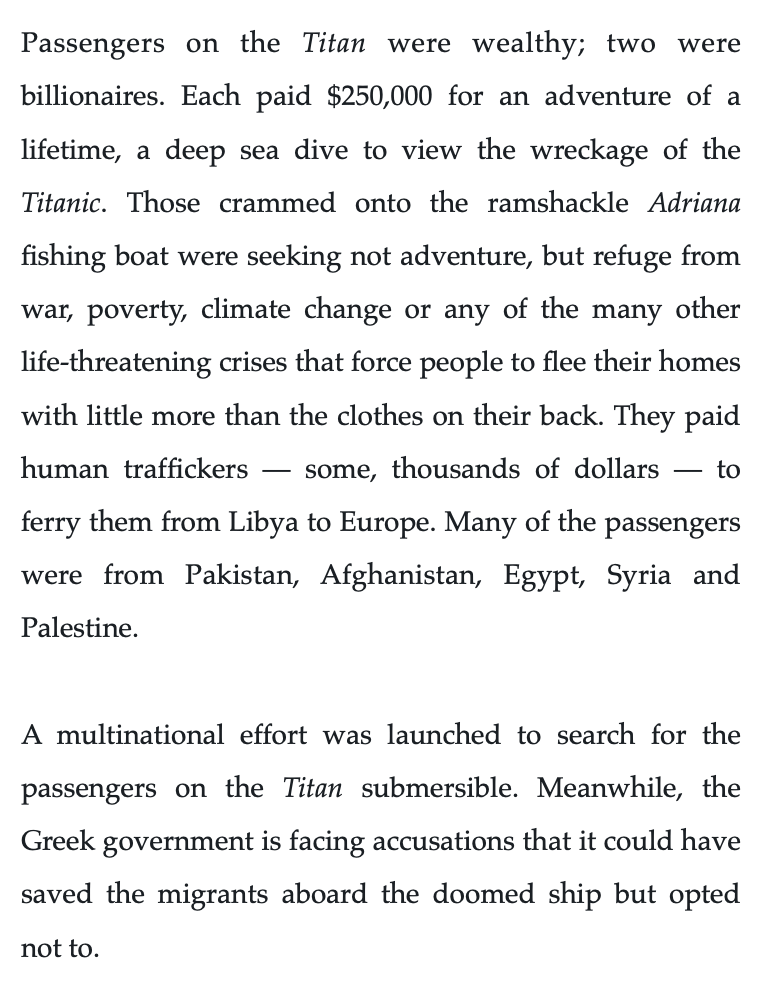
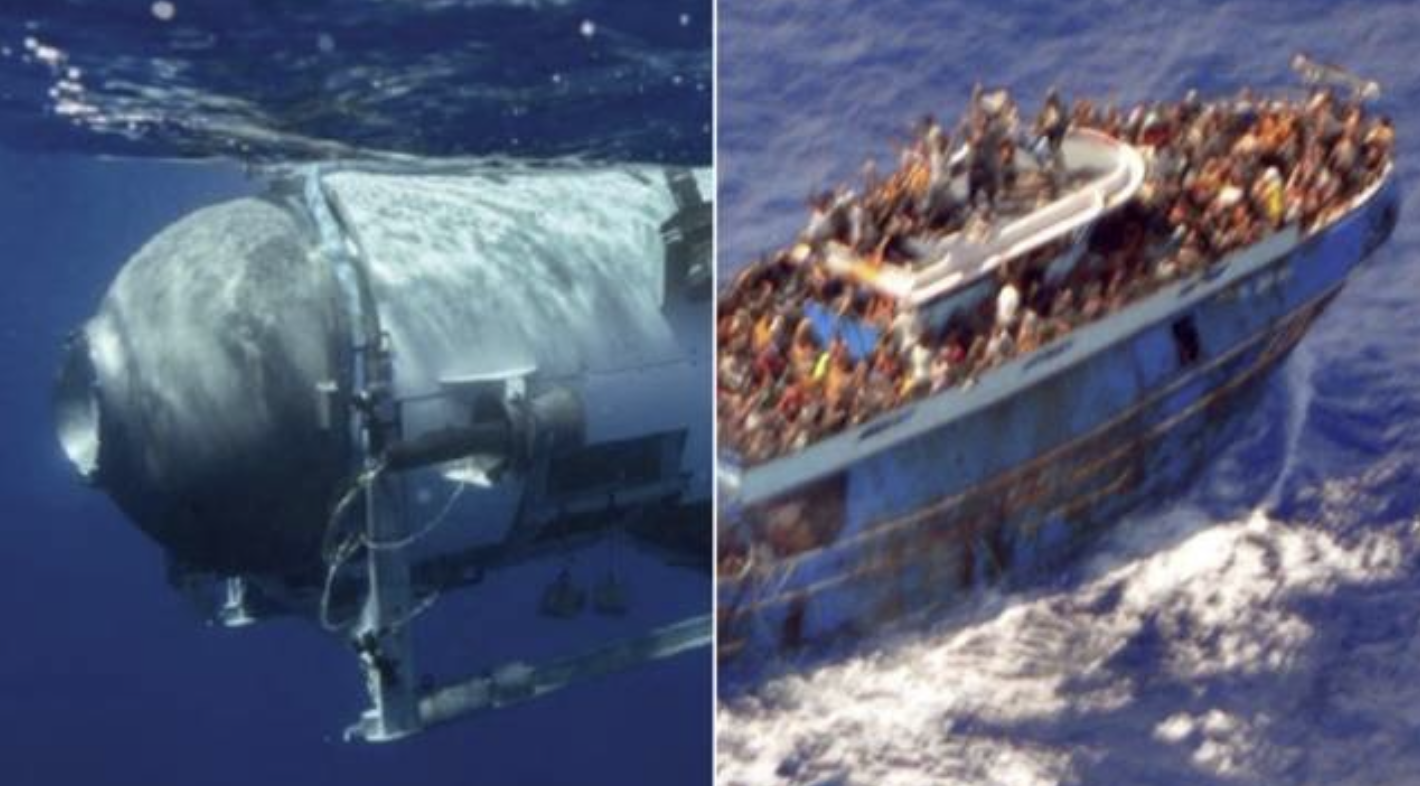
A Tale of Two Sinkings

Now comes Amy Goodman, with an introduction to a Democracy Now segment reflecting on the disparity of media attention between the implosion of Titan/ic delusions and the tragedy of the Adriana. The entire segment, linked via the image below, is worthy of close consideration.


˜˜˜˜˜˜˜


Show & Tell

In response to the typically grandiose claims made by Elon Musk while updating the world on “progress” regarding brain chips, the honorable non-profit, Physicians for Responsible Medicine, released their own Show & Tell.


Noninvasive Brain-Machine Interfaces Are the Future

Devices implanted in the brain come with a myriad of problems, including difficulty of repair and a high potential for severe medical complications. In comparison, noninvasive BMIs can allow for the risk-free monitoring of large-scale neuronal activity across the entire brain. 

While Neuralink continues its invasive, painful, deadly experiments, noninvasive methods—which often rely on brain signals read using an electroencephalogram (EEG)—are already changing patients’ lives and hold even greater promise:

  • Noninvasive BMIs can improve quality of life for older adults and elderly patients. They “have been used for restoring memory and planning using electromagnetic stimulation and biofeedback that modulate activity in a patient’s brain as part of a rehabilitation program….Moreover, invasive [BMIs] that require implantation of the device might be a serious ethical issue. Therefore, non-invasive EEG-based [BMIs]…appear to be the most promising technologies.”
  • They can “assist paralyzed patients by providing access to the world without requiring surgical intervention.”
  • They can allow patients with limited mobility to control robotic arms. “[Invasive BCIs] require a substantial amount of medical and surgical expertise to correctly install and operate, not to mention cost and potential risks to subjects…”
  • They can allow patients with severe tetraplegia to control a wheelchair.
  • Noninvasive BMIs can also allow people to communicate directly using a computer, and research is being done to improve this capability.

The development of noninvasive BMIs should be the focus of innovation, and there is clearly much discussion in support of moving in that direction. Neuralink should halt its animal experiments immediately and invest in human-relevant research.

————–

DP view: Neuralink is nothing more than a synthesis of technophilic hubris with human supremacist abuse of other sentient beings, in this case, our close relatives.

We are also skeptical of noninvasive BMIs for the simple reason that we live in a time of Inverted Utopia wherein we are unable to imagine the full range of consequences of our technological innovations, particularly when it comes to messing with our brains. 

We close this week’s post with a montage of excerpts from the TV series The 100, regarding a lethal intermingling of brains chips, AI, violence, anthropocentrism, Inverted Utopians, oblivion and extinction:


˜˜˜˜˜˜


Of Icebergs and Lifeboats


ICEBERG DEAD AHEAD

One hundred and ten years ago, at twenty minutes before midnight in the North Atlantic, an unsinkable dream machine named Titanic struck an iceberg and sank within three hours, with over 1500 lives lost. The iceberg carried on as before, true to its own implacable nature.

Here at DP, we have long interpreted the story of the Titanic as an early warning for what happens when arrogant hubris obliterates our collective ability to anticipate or even comprehend the consequences of our limitless capacity for technological invention, a condition that Günther Anders called “inverted utopia.”

With regards to the climate emergency, some in well-insulated positions of geographic or economic privilege still quibble over whether we have struck the iceberg quite yet, though surely nobody with a basic grasp of the data fails to see the ice cubes raining down on the foredeck. Many in the global south are already suffering severe consequences, slow violence that will become ever more deadly in years to come.

At least on the Titanic, Captain Edward Smith tried to avert collision, though the physics of speed and mass intervened in favor of the berg. He surely felt a magnified degree of urgency given his knowledge that there were nowhere near enough lifeboats for passengers and crew, and that the crew had received scant training in how to abandon the magnificent vessel on her maiden voyage. Why bother to think about lifeboats when you are unsinkable?

Today, when we are not pretending that the iceberg is a mirage, we try to convince ourselves that the iceberg can be averted by our own unsinkable dream machine: Net Zero before 2030; Carbon Neutral before 2050; the Green New Deal; blah blah blah. Alas, there are those same naggingly inescapable problems of speed, mass and momentum. The good ship USS Mammon, she’s a hard hulk to steer, aye.

We are also burdened by that same nagging problem of lifeboats: not enough of them, with unequal access to those few that exist; little or no training on how to manage the panic and chaos of countless numbers of people attempting to secure a severely limited number of chances to survive; inadequate supplies of food, medicine and rudimentary survival gear on board the lifeboats; and a pronounced paucity of skilled leaders for emergency evacuation and forward navigation.

Titanic survivors were brought on board the Carpathia, whose passengers included a gentleman named James Fenwick. Mr. Fenwick somehow came into possession of a lifeboat pilot biscuit; in 2015, that inedible survival biscuit was sold at auction for 15,000 British pounds. Inverted Utopians prefer not to discern lessons from our hubristic disasters; so much more fun to sell the memorabilia for whatever price the market will bear.

The lessons, inevitably, will thereby become ever more severe.


COLLAPSIBLE BOAT D IN THE MIDST OF THE UNIMAGINABLE



Viral Revelations

Across the duration of the SARS-CoV-2 pandemic, we have refrained from saying much about Queen Corona, once it became clear we would blithely ignore her deepest lesson, namely that we must change how we are living in relation to the web of life that sustains our earthly presence.

A recurring theme within DP for the past decade: we humans will do anything to avoid changing our basic behavior. Yet that avoidance, typically accomplished through various tech fixes and fetishes, always releases consequences unanticipated by the fixers; the social and political complexities of the inverted utopia in which we live makes it impossible for us to imagine the implications of our clever inventions. Through time, this predicament tends towards what Anders identified as a world in which “we make ourselves superfluous, eliminate ourselves, liquidate ourselves.”

With this theme in mind, we bend an ear to a recent essay by Paul Kingsnorth, distinguished novelist and co-founder of the Dark Mountain Project. The entire essay is worthy of close reading; brief excerpts below, with images and captions added by DP.


PLAN FOR A FUTURE RESIDENTIAL DEVELOPMENT


FROG SLOWLY BOILING WITHIN THE ALGORITHM


We strongly recommend this related interview, as well:


˜˜˜˜˜˜˜


Apocalypseburg

This week, as we read about plans to expand the deep sea mining of minerals required for electric cars and other “green” consumables such that we might continue living in our human supremacist bubble, we urge consideration of a few prescient remarks from Srećko Horvat, a Croatian philosopher and the author of the recently published book, After the Apocalypse.

Images are relayed from the Lego website, marketing their new playtime scenario, Apocalypseburg.

HEY, WANNA DOOMSCROLL?

LADY LIBERTY INSIDE AN INVERTED UTOPIA

[…]

I’M NET ZERO, WHO ARE YOU?

The Imperative of Love

This week, we return to our familiar motif of “inverted utopia”, a world wherein we cannot imagine the implications of our clever technologies. Such is the case in many reactions to climate catastrophe: fear not, we will invent new tech and engineer ourselves into a Green New Deal

Yet fixes that leave deep structures in place will have the same result as wrapping infected wounds with bandages without treating the infection. Without a fundamental change in the relationship between Homo Sapiens and the whole of life, ever more clever tinkering will only serve to deepen the crisis while feeding the toxic delusion that we are in control as rulers supreme. 

With this in mind, we turn to a a few passages from recent reflections made by Barbara Cecil in counterpoint to Dahr Jamail. Images are from the Sogetsu School of Ikebana.


Her closing sentence, which should be inscribed in the heavens:

The work of these times is not about saving the world but in belonging to it more fully.


Tapered To A Claw

At this time of year, our thoughts drift to the North Atlantic in the year 1912. Steaming at top speed towards the American dream machine, RMS Titanic represents coal-fired energy; class hierarchy; technophilia; and unabashed hubris. Somewhere out there in the dark, floats a frozen antagonist, representing Deep Time and all those forces that elude human grasp.

Most art and poetry that reflects on her doomed voyage focuses on the behavior and disposition of passengers and crew; we prefer to contemplate the iceberg. Below, an excerpt from a longer poem by E.J. Pratt. Born in Newfoundland and a keen student of the Northern waters, Pratt knew a thing or two about large chunks of ice.


THE CLAW WAITS FOR MIDNIGHT


Needless to say, we learned nothing from that disaster, nor from any of the countless disasters that followed. As inverted utopians, we remain unable to imagine the implications of our clever tech.

Full speed ahead.