Category Archives: buoys

At the Heart of Things

Now comes the voice of Paul Kingsnorth, with an excerpt from an essay recently published in Orion magazine, The Axis and the Sycamore:

Paul Kingsnorth is a co-founder of the Dark Mountain Project, with its strong emphasis on conceiving new forms of storytelling as a way of reimagining the world, outside the toxic bubble of human supremacy. The word-coupling “dark mountain” descends from a Robinson Jeffers poem:

Man is not in the persons but in the 
Disastrous rhythm, the heavy and mobile masses, the dance of the 
Dream-led masses down the dark mountain 


Toxic Dominion

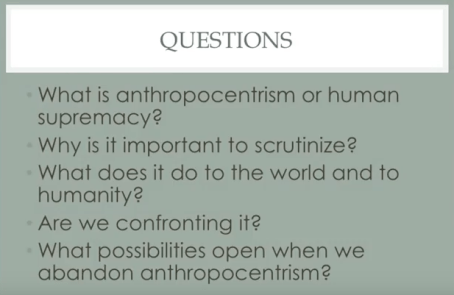
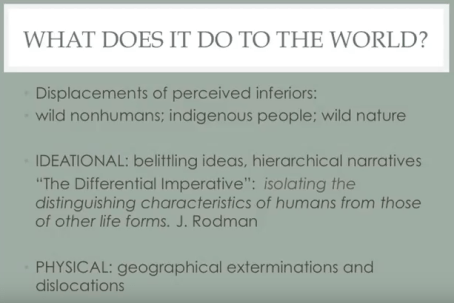
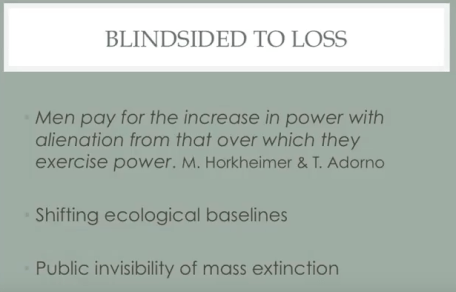
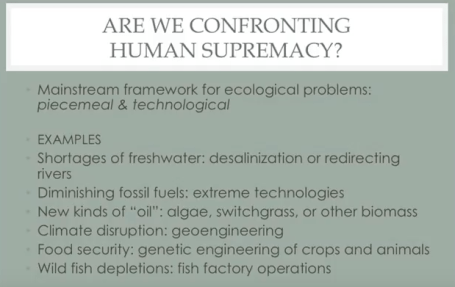
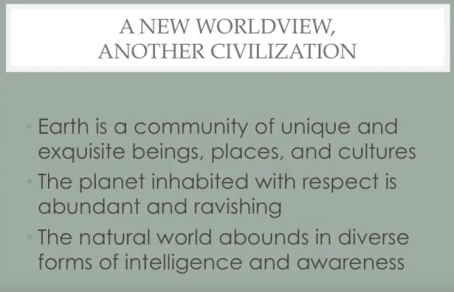
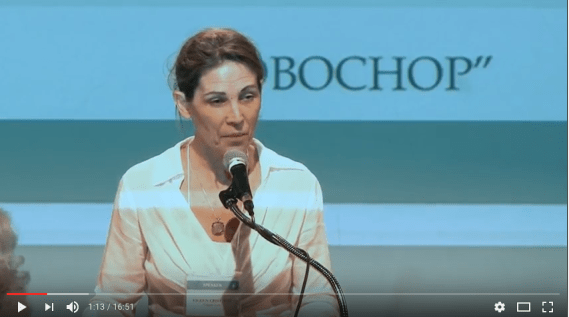
We are indebted to a faithful DP correspondent for steering us to an excellent 2014 lecture presented by Eileen Crist, in which she articulates a concise overview of what she calls the Human Supremacy Complex, or toxic anthropocentrism.

Professor Crist begins with a reference to an October, 2013 article published in The Economist reporting on a clot of jellyfish inside cooling pipes at a Swedish nuclear reactor, a report that swiftly mutates into an infomercial for a new technology named with the perverse acronym JEROS: Jellyfish Elimination Robotic Swarm. According to its creator, JEROS will chew through even the most exhuberant clot of jellies, and thus keep our nuclear reactors humming.

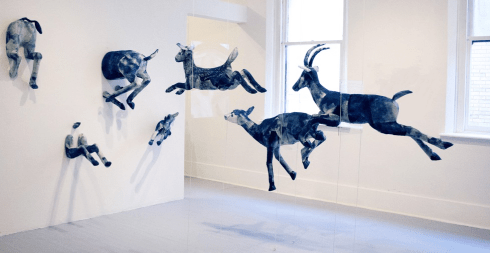
The entire lecture is linked below, followed by a montage of her slides that convey a useful summary of core questions and arguments. The final image is taken from The Herd, an installation project by Tasha Lewis, whose studio we shall revisit in future posts.
tl6

THE HERD

˜˜˜˜˜

If we refuse to learn how to live responsibly within this “community of unique and exquisite  beings”, clinging to the delusion that no matter what ruinous consequence we inflict upon the natural world, our clever technologies will always save us: we shall be obliterated.

Though JEROS robochops jellyfish into mush, it will take more than robot swarms to chew through the lethal clot of our own hubris and arrogance, such that we might embrace the “abundant and ravishing” planet, “inhabited with respect.”

The Shattering Wonder

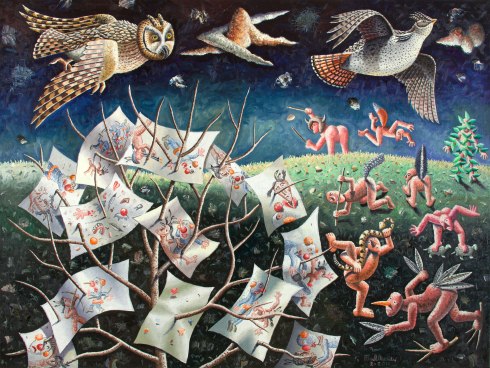
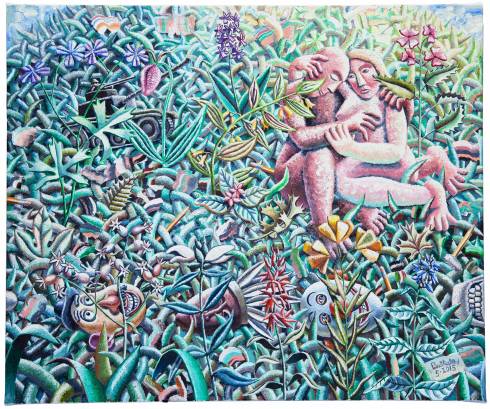
This week we return to the work of David Abram, in his masterful recuperation of embodied knowledge, Becoming Animal; excerpts from the introduction below, interwoven with images from the studio of Morgan Bulkeley.

WHERE LATE THE SWEET BIRDS

SPRING AND RUMBLINGS

VENUS AND SPATS


Look Under Foot

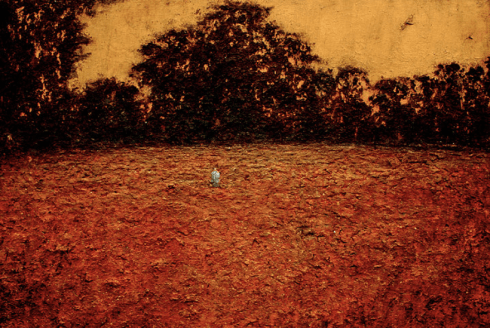
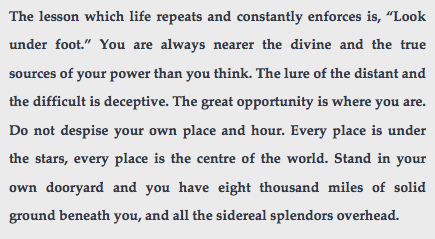
Faced, or rather footed, with an absurdly early mud season here in New England, we excerpt an essay by John Burroughs first published in The Atlantic in 1908. The images are from a series of dirt paintings by Donald Bracken.

jb1

db3

jb2

db4

jb3]db5

jb4


Radical Wisdom

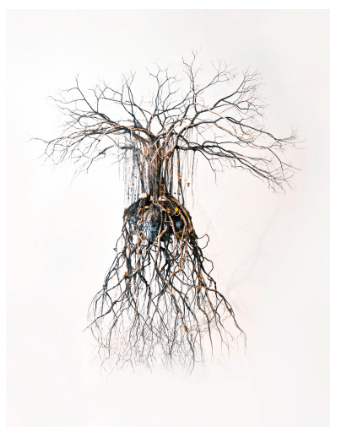
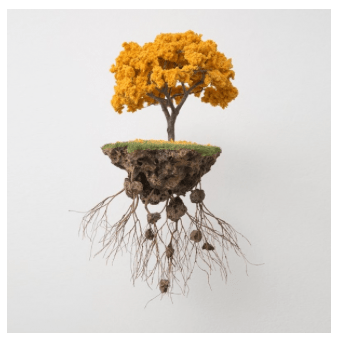
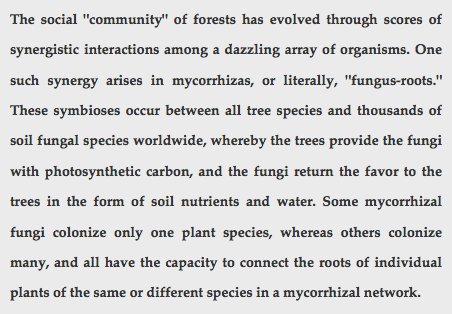
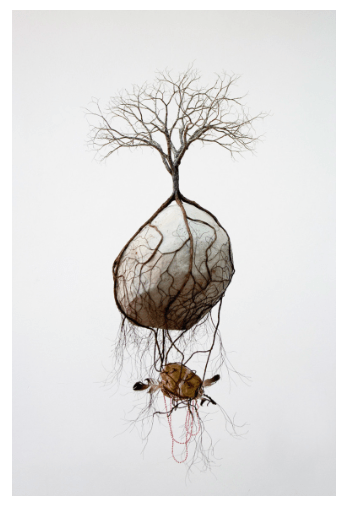
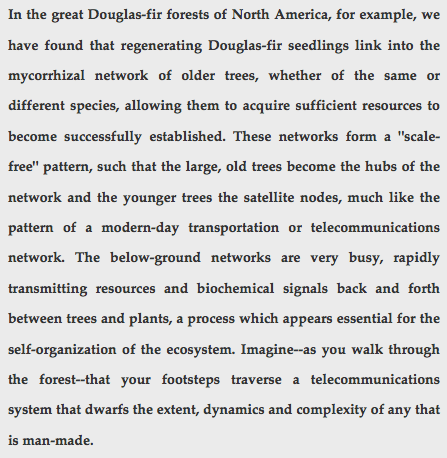
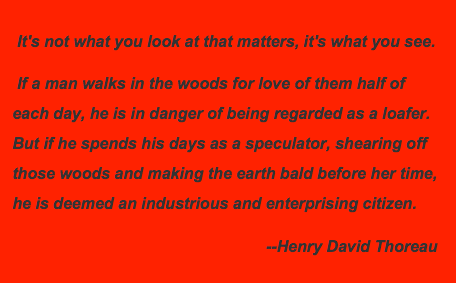
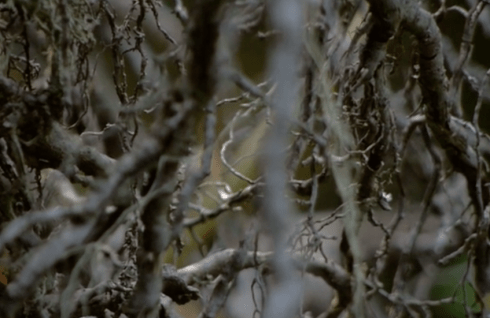
Digging more deeply into the theme of the sentient forest, we turn to an essay by ecologist Suzanne Simard published in 2015 by SGI Quarterly, excerpted below. The images are from the studio of Jorge Mayet.

ss1

lm4

ss2

jm1

ss3

jm3

ss4

jm2

[….]

ss5

hdt1


The Sentient Forest

Despite copious evidence to the contrary, many technologically advanced humans cling to the belief that they embody the pinnacle of evolutionary biology. Once we accept the possibility that such deadly arrogance is misplaced, we might open our selves to the living world beyond and beneath us, and learn from far more evolved beings such as trees in their forests, or what survives of them after hundreds of years of human extraction.

Consider the following excerpt from Peter Wohlleben’s pioneering book, The Hidden Life of Trees. Images are pinged from the trailer for the important new documentary, Intelligent Trees.

hlot1

it2

hlot2

it1

hlot3

Many humans suffer from the delusion that whatever they senselessly eradicate can be replaced with clever inventions, like — in the most recent perverse iteration — robobees. Scientists like Wohlleben and Suzanne Simard blaze a different path, one long embraced by surviving remnants of indigenous cultures, those the “advanced” humans have not obliterated. Guided by a deeper understanding of our living world, can we find the courage and wisdom to follow it?

fpath


That Crazy Darkness

Taking note of unhinged draft executive orders regarding increased use of Guantanamo Bay for renewed extrajudicial detention and torture of unspecified “bad dudes”, we turn to the voice of Mohamedou Ould Slahi, a detainee from 2002 until his release this past October due to the lack of any evidence beyond unsubstantiated statements made to interrogators while undergoing torture.

Below, an excerpt from Slahi’s extraordinary memoir, Guanatamo Diary, with two images from Jenny Holzer’s series, Dust Paintings:

slahi1

jh2

slahi2

jh1

slahi3

˜˜˜˜˜

As reported in the Guardian, Steve Kleinman, chairman of the research advisory committee to the High Value Detainee Interrogation Group (HIG), thus with access to actual facts and not to “alternative” (read: delusional) facts regarding torture, stated:

“If the US was to make it once again the policy of the country to coerce, and to detain at length in an extrajudicial fashion, the costs would be beyond substantial – they’d be potentially existential.”


Written in the Night

Now comes the gentle yet fierce voice of John Berger, who died this past Monday, in excerpts from a 2003 essay written for Le Monde Diplomatique. The image is from the Rothko Chapel.

jb1

rothko

jb2

For all his literary gifts, Berger was most at home in conversation, his thoughts closely tied to his limitless capacity for dialogue, and to his vigilant ears. The below conversation with Susan Sontag highly recommended.

jbss


jb3


A Head in the Clouds

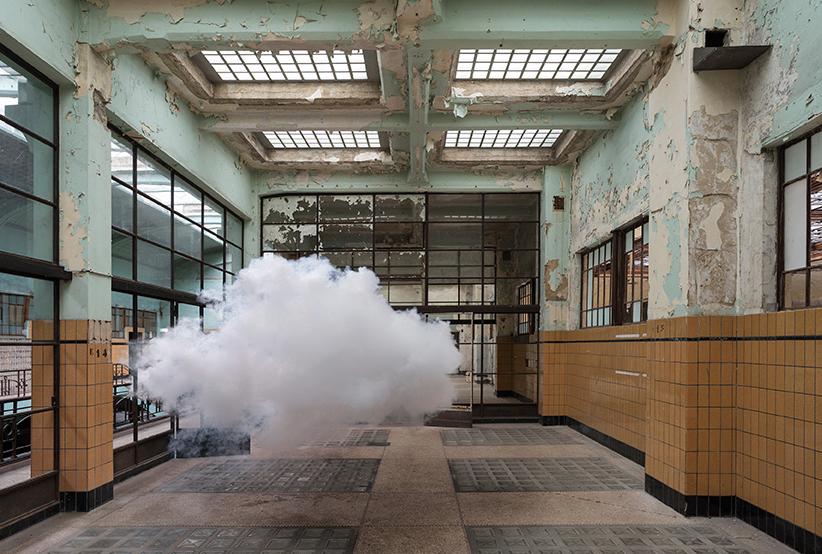
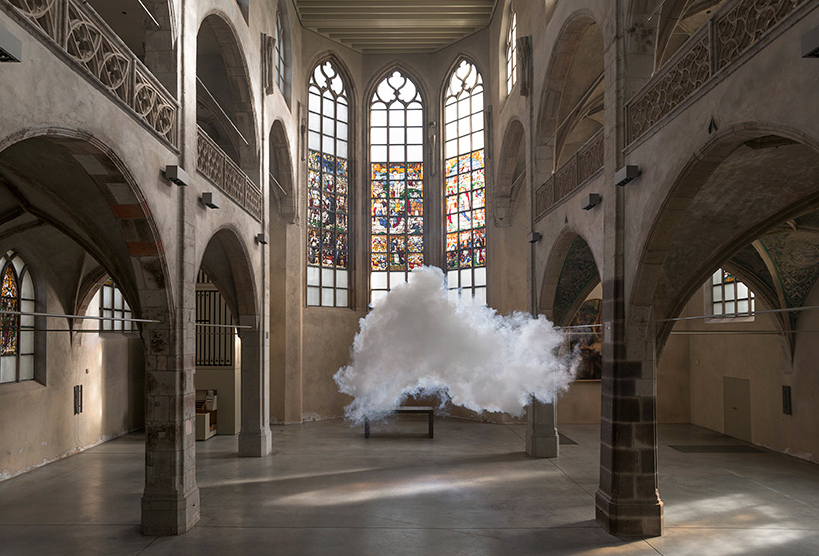
Now comes John Durham Peters, floating a few thoughts in the vicinity of his book The Marvelous Clouds, in which he outlines a philosophy of elemental media that is anything but vague. The images are from the haunting cloud generations of artist Berndnaut Smilde.

jdp1

bs1

jdp2

bs2

jdp3

bs4

jdp4

For once, we have nothing to add: The Marvelous Clouds offers an exceptional philosophical itinerary, pursued by a subtle, deep and playful mind. Highly recommended for all DP readers.


We Are Number One

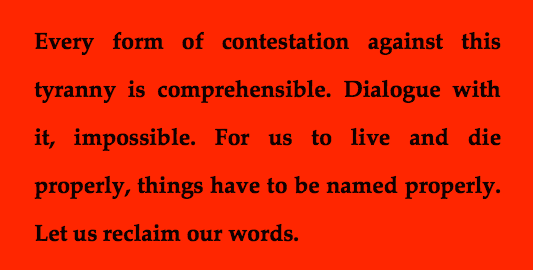
Now comes poet Robert Bringhurst, through an essay written for the esteemed Dark Mountain Project, and excerpted below. The images are from a Robert Montgomery series of watercolour texts.

dm1

rm1

dm2

rm3

dm3

rm2