Among the very few artists/writers addressing issues of security architecture, surveillance and the weaponization of communications airspace, we find Charles Stankievech of particular interest. His new installation “cleanses the air” in the vicinity of Marfa, Texas – with its own complex art historical resonance.
Below, a description of the installation taken directly from the press release, followed by a dialogue with the artist; a lengthy post for DP readers, justified by the importance of this brilliant and timely work.


DP: Can you give a brief exposition of your work north of the US border with Canada, and how that leads in both logical and unexpected ways to Marfa?
CS: I’m interested in extremes—mainly because exceptions to the rule usually tell us what is paradoxically at the heart of an ideology. People love to tout the “American Dream”, but exceptions/prohibitions/extremes often tell us more what a culture shares and is defined by. As a result, I’ve spent a lot of time over the years looking at outpost architecture and military infrastructure. It might not tell us much directly about the everyday citizen but it sure reveals a lot about the values maintained to protect the culture—or at least those in control of the culture.
The first window into this mechanics I discovered doing site visits, researching archives and producing work about the Cold War’s DISTANT EARLY WARNING (DEW) Line in the Arctic which was created as a bilateral defense infrastructure to protect continental USA from Soviet attacks. As a result, I looked into the history of the electromagnetic in the arctic from early Marconi experiments with the US military to current experiments at HAARP.
Marfa is on the other NORAD border one could say, and I was invited to do a residency on the border with Mexico because of my research in issues of fluid boundaries. Judd’s Chinati Foundation is also interesting because it is housed in an old military base that was operational from around 1910-WWII—so even Marfa’s existence is premised on military outpost architecture.
DP: What sort of field research have you conducted along the southern border?
CS: A lot of travelling and photographing things throughout the landscape for sure: from swimming in the Rio Grande to lots of driving and hiking. Just existing in Marfa for a while you get a pretty heavy does of Homeland Security. You drive a couple miles out of town and you go through a border checkpoint even though you aren’t crossing a border. While officially the border is the Rio Grande, the entire area is more like a border zone and quite different than the 49º parallel. The most common vehicle you see here is one of the many from the fleet of Border Patrol. There are also military installations that use Surveillance Aerostats (zeppelins) in the area.
With a little bad luck turned good, in the first week driving around in West Texas I had some car trouble and the Border Patrol stopped to check on what was transpiring. It took about an hour for civilian help to come and in the meantime they hung around. I was able to talk about their work the entire time and learned quite a bit such as the gap between official mandates of Homeland Security (prevention of terrorism as their prime directive) and the reality of the daily job (picking up 15 illegal Mexican immigrants the day before).
DP: Your use of bug zappers resonates very well with the language of dehumanization used by the CIA and other agencies to describe drone strikes as “bug splats”.
CS: I actually wasn’t aware of this terminology until you mentioned it to me. It’s one of those latent meanings that surprised me when I was trying to make a poetic connection between the ideology of security and a citizen’s everyday object—only to find out it is not a poetic piece of satire but sadly the entrenched mentality already made manifest in official cynical language. The stranger part is that the term “bug splat” connects two projects I did in the last month: HOMELAND SECURITY in Marfa, Texas and my recent performance at dOCUMENTA(13) in Kassel, Germany, which I titled Drone Strike.

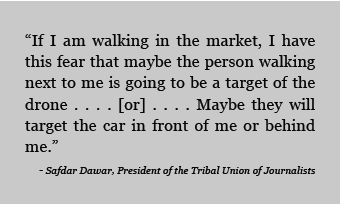
DP: We are also struck by the metrical use of grids in the installation, grids that are also present in the geometry of surveillance and death, in the skies above Waziristan and other target populations. Indeed, the rhythms and metrical order of the grid appear central to the aesthetics of global information dominance.
CS: Do you know that eerie short story by J.G. Ballard “The Watch-Towers”– A wonderful panopticon story of a grid of watchers hung above the city 25ft above the roofs and in a grid spaced out 300ft in each direction?
I don’t want to give the Grid a bad name as it’s an ancient and remarkable system that’s allowed a considerable improvement of life , but I did first come to understanding the colonial implications of math and the metrical by studying clocks on exploration ships and their need to keep precise time to map out the grid work of latitude and longitude as delineated from the colonial center: Greenwich. In this way, traditional indigenous navigation based on landmarks and narrative were replaced by the “objective” mathematical grid only making sense from the perspective of the colonial capital.
There is nothing inherently violent about the grid—it’s simply the universalizing of space, which can be good or bad. Since it’s the cheapest and most efficient parsing of space based on universal application vs. specific sensitivity, the grid ends up being utilized by systems ranging from the military to minimalism; it’s no surprise then that the scale and layout of HOMELAND SECURITY was partly based on Donald Judd’s aluminum box sculptures installed here in Marfa at the Chinati Foundation.
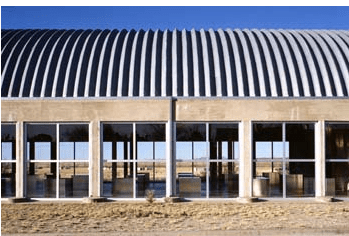
ARTILLERY SHEDS
Today however, I think we are witnessing the decline of the grid in a lot of ways—or at least the outdated style of the grid (as we will never leave it totally behind). I feel my installation appears dated because of its grid structure, probably because I studied a little bit at the Architectural Association in London which is one of the hotbeds for parametric design—basically curvy architecture made famous by F. Gehry, G. Lynn and Z. Hadid. The Grid is so Modern according to architectural aesthetics. Today the vogue is organic patterns or complex modeling, using computers.
As far as global information dominance, the grid stands in for static structure, while dynamic theories of topology are gaining more and more prevalence. I’m thinking here of such people as Deleuze+Guattari, Paul Virilio, Alexander Galloway, Eyal Weizmann and Ben Fry who are aware of the shift from controlling a square plot of land to controlling the protocol of connections in a network. All of this said, I do understand what you mean by the “geometry of surveillance and death.” The zappers installed this way suggest a sense of “instrumental reason”.
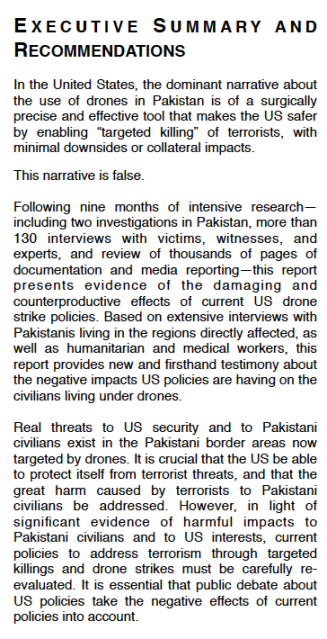
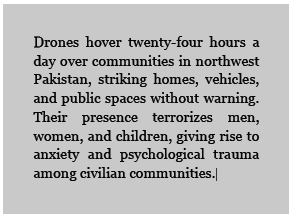
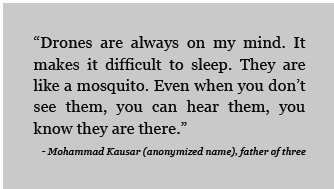
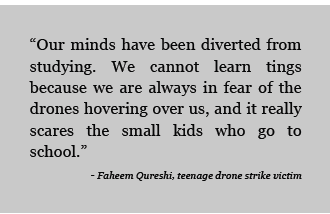
DP: The acoustics of your installation summon the buzzing sound of the ubiquitous drone zone; a recent Stanford/NYU report identifies sound (particularly the ominous buzzing) as a key aspect of the psy-ops trauma experienced by non-comabatant civilians on the ground. You have long been concerned with vibrational and acoustic space as key aspects of securing boundaries and controlling bodies.
CS: “A SCREAMING COMES ACROSS THE SKY. It has happened before, but there is nothing to compare it to now. It is too late. The Evacuation still proceeds, but it’s all theatre. There are no lights inside the cars. No light anywhere. Above him lift girders old as an iron queen, and glass somewhere far above that would let the light of day through. But it’s night. He’s afraid of the way the glass will fall—soon—it will be a spectacle: the fall of a crystal palace. But coming down in total blackout, without one glint of light, only great invisible crashing.”

THE SOUND COMES LATER
These are the first lines of Gravity’s Rainbow, by Thomas Pynchon. He brilliantly compared the difference in Psychological Warfare in the civilian terror bombing of London during WWII as part of the Vengeance strategy of the NAZI Wehrmacht. The V-1 “buzz bombs” used in the first attacks were insanely loud and caused panic when they were heard—heralding an imminent attack. The V-2 “vengeance rocket” , being supersonic, travelled faster than the victims could hear it—it arrived before the sound of itself did so. In effect, the psychological terror switched. Basically, one lived in fear continually knowing an early warning was impossible and if you heard an explosion, it meant it missed you and you were a survivor — sometimes not always better than being a victim.
However, with the ubiquity of drones since 1982 and their implementation of surveillance equipment, not just weapons, again we return to a buzz in the sky as not only a by-product of a Vengeance weapon— but used with full knowledge of its sonic terror. It’s a well-known strategy that in breaking a prisoner in an interrogation the threat of pain can be as effective as conducting pain — some say more so. Sound has always been an important part of psy-ops: from the repetitive looping of the Sesame Street’s theme song as an interrogation method to drone buzzing.
We can’t forget of course of Virilio’s analysis of drones used in the Vietnam War (1960s) and the Israeli war “Peace in Galilee” (1982) in his book War and Cinema: The Logistics of Perception that was written before smart bomb videos became pop culture in the 1991 Gulf War: “This toy craft, worthy of Ernst Jünger’s Glass Bees”.
DP: How does your analysis of outpost architecture relate to Virilio’s bunker archeology, and his ideas about orbital space?
CS: Virilio’s Bunker Archeology is a paragon of research for me in so many ways: his existential fieldwork, aesthetic engagement and vast research in military strategy shine with his cutting insights. I’ve tried to extend or repurpose his methodology as applied to WW2 Bunkers to my analysis of Cold War Geodesics Radomes. Essentially my thesis is: ‘the Geodesic Radome is the synecdoche of post-WWII warfare—an architecture that distributes its structural forces through a framework formally related to the communication network connecting the architecture.’
This comes out of Virilio’s analysis in Bunker Archeology: “While most buildings are embanked in the terrain by their foundations, the casemate [bunker] is devoid of any, aside from its centre of gravity, which explains its possibility for limited movement when the surrounding ground undergoes the impact of projectiles. …the bunker is the last theatrical gesture in the endgame of Occidental military History.”
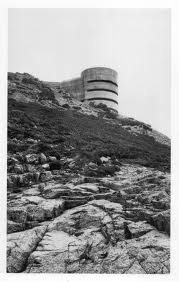
THE LAST THEATRICAL GESTURE
I find it interesting that Virilio doesn’t engage with the geodesic radome in his theories of “orbital space” even though he uses in Speed and Politics the phrase “geodesic war”, but maybe that is his extreme point — his movement away from real architecture to the dematerialisation of space. Any building at all is too slow; he prefers the image of the parabolic missile echoed in the parabolic trajectory of Albert Speer: from director of New German Architecture to Minister of Munitions. But I have the existential experience with radomes that he had with bunkers, and being more an artist than a philosopher these days, I’m aware of the materiality of the digital, and hence the reality of terrestrial surveillance outposts like CFS ALERT which I worked at this past year while under contract with the Dept. of Defense to make artistic depictions of their signals intelligence station located at the most northern settlement in the world: 82ºN.
DP: Finally, also with reference to the locus of Marfa: Donald Judd had an uneasy relationship with the establishment art world, an uneasiness or skepticism which you seem to share?
CS: Probably most artists have an uneasy relationship to the established art world. Judd’s personality included loud opinions and he had the ambition and eventually the funds to attempt some sort of relative autonomy, so we are more aware than normal of his uneasiness. While we both moved to remote regions to “start” unique institutions (Chinati in Marfa by Judd, Yukon School of Visual Arts in Dawson City by myself and a crew of other people), the motivation for both us is a little more complicated and probably quite different — especially since we did it at different points in our lives.
I do know from anecdotes told by people here in Marfa who knew Judd that when he was alive he didn’t like the border patrol, and that he even wrote a letter to the Mexican authorities after being harassed one time near his ranch. The irony today is that the JUDD Foundation and Chinati Foundation are firmly part of the art world establishment. Thus the cycle continues.

CYCLE IN BLUE





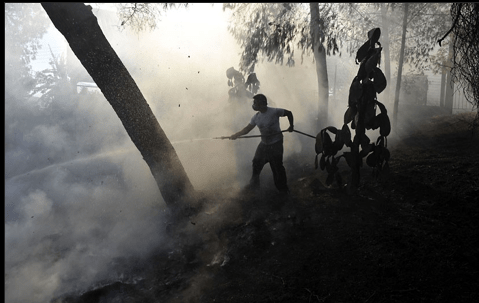




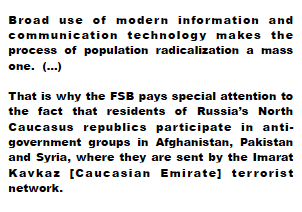 Population radicalization comes in many flavors, and the suggestion of a “forest jihad”, unhindered by the lack of credible evidence, has certainly spread like wildfire within th

















 Alas, what Obama has described as “absolutely true” is absolutely false, since in fact his one sacred duty, as articulated in the oath of office, is to preserve, protect and defend the Constitution of the United States.
















 Desperado Philosophy