Author Archives: DP

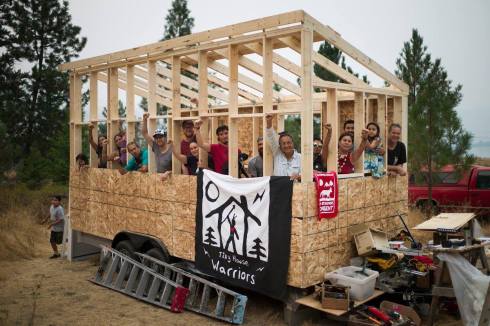
Tiny House Warriors

According to a recent report by the UN, the gap between government pledges and carbon emission realities remains potentially catastrophic for coastal cities and communities. Current pledges made by governments and private corporations will increase temperatures by three degrees centigrade by the end of this century, well in excess of the stated two degree limit, as negotiated during the much ballyhooed COP 21.

As we stated at that time, the struggle against burning fossil fuels into oblivion will not be successfully advanced by fatuous elites at feel-good events such as the forthcoming COP 23; only direct action at the local level, such as the long struggle at Standing Rock, will create the necessary changes in behavior and global awareness.

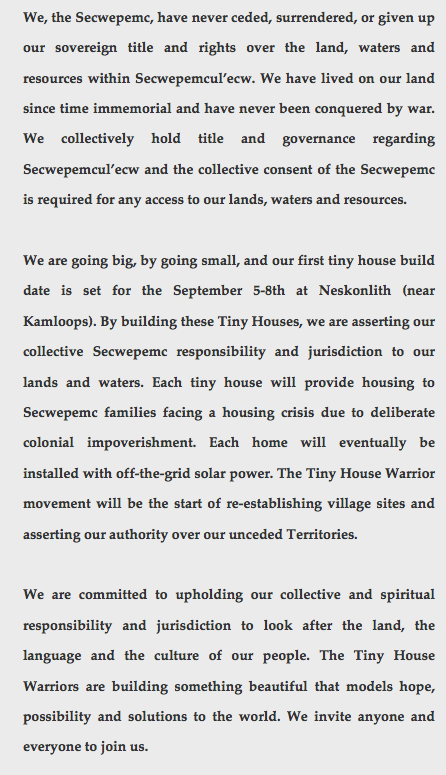
This week, we serve as relay for a statement by the Secwepemc people announcing their action to block the Kinder Morgan Trans Mountain Pipeline, a statement that conveys far more power and meaning than anything that will emerge from the assembled gas bags in Bonn:


˜˜˜˜˜

For a Greenpeace video profile of the Tiny House Warriors, click below:

˜˜˜˜˜


Malignant Normality

In an essay published in the Spring 2017 issue of Dissent, Robert Jay Lifton reminds us that the same ethical distortions that he discerned among physicians in Nazi Germany may occur among other groups of professionals at any time. Excerpts below, with a few malignantly normal charts from Stanley Milgram’s Obedience To Authority.


˜˜˜˜˜

We are reminded also of a passage (slightly edited by DP for continuity) from a letter written in 1964 by Hannah Arendt to Gerhard Scholem:

You are quite right, I changed my mind and do no longer speak of “radical evil.” It is indeed my opinion now that evil is never “radical,” that it is only extreme, and that it possesses neither depth nor any demonic dimension. It can overgrow and lay waste the whole world precisely because it spreads like a fungus on the surface. It is “thought-defying,” as I said, because thought tries to reach some depth, to go to the roots, and the moment it concerns itself with evil, it is frustrated because there is nothing. That is its “banality.” Only the good has depth that can be radical.

˜˜˜˜˜


Christianity, Race, Incarceration

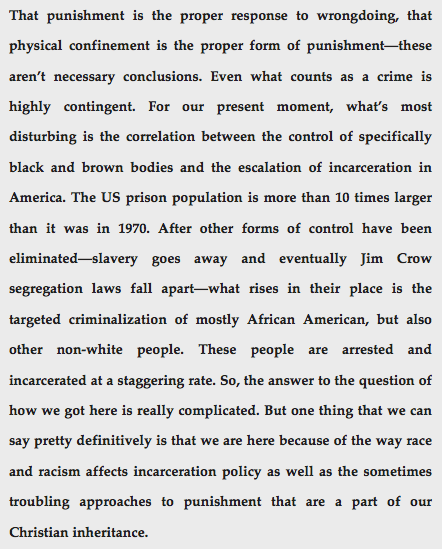
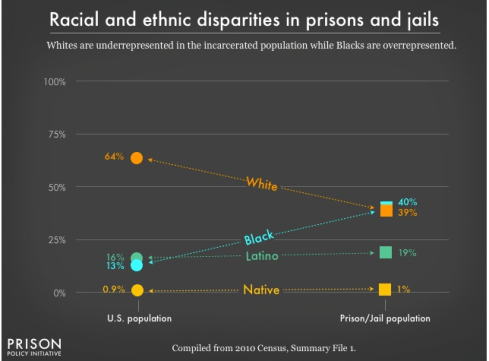
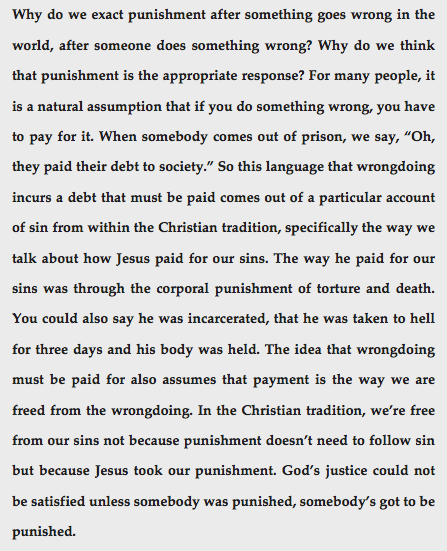
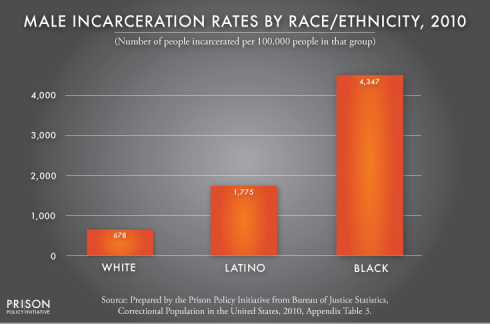
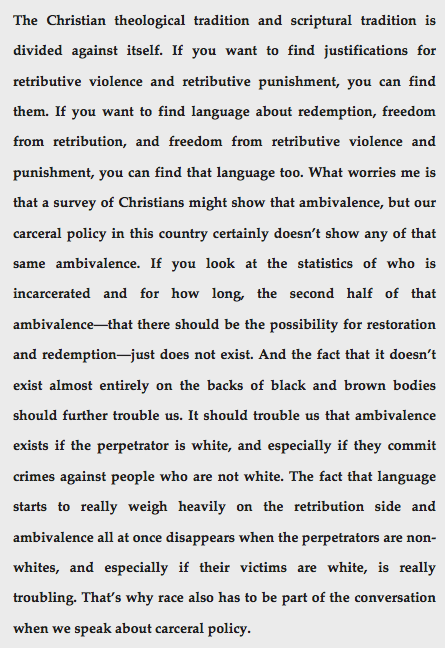
Now comes Assistant Professor of Ministry Studies Matthew Potts, with lucid comments regarding the Carceral State, made in advance of a conference held at Harvard Divinity School. The charts derive from research compiled by the Prison Policy Initiative.

˜˜˜˜˜
See also an excellent essay  by Marie Gottschalk in The Atlantic Monthly; and Michelle Alexander’s recently published The New Jim Crow, which we will be reading closely for a future DP.


Reverence and Awe

This morning, the entire editorial staff of DP spent a productive hour closely observing a quartet of male turkeys making their way through nearby meadows and woodlands: vigilant, alert, very much in touch with each other and with the landscape. We were unable to suppress the recognition that within a few weeks at least half if not all of these sentient and social toms will likely be “harvested” by humans to participate through their death in yet another one of our fantasy histories: Thanksgiving Day.

In the bigger picture, the human species continues its mad descent into the unfathomable depths of what Robert Jay Lifton calls “malignant normality”, a concept we will explore in detail in a future DP. For balance and sanity regarding the whole of life on earth, we have been re-reading Mark Bekoff’s indispensable The Animal Manifesto, with an opening passage excerpted below.

Images: a trio of watercolors from the studio of Rebecca Clark, whose art so gracefully and powerfully embodies reverence and awe for the natural world, a wisdom that we must all embrace if we are to have any chance of breaking the death spiral, of which the psychopathology of contemporary American politics is but one of many alarming symptoms.


˜˜˜˜˜

Resonant with Bekoff’s manifesto, please also consider a keynote address from this year’s Animal Rights conference, as delivered by Lauren Gazzola:

LG

˜˜˜˜˜

And finally, a few more words from Thomas Berry, from his magnificent The Dream of the Earth:

“Our challenge is to create a new language, even a new sense of what it is to be human. It is to transcend not only national limitations, but even our species isolation, to enter into the larger community of living species. This brings about a completely new sense of reality and value.”


Piles of Nothing

This week, we turn to the luminous Masha Gessen as she penetrates the dark, murky language of the autocrat in an essay published last May in the New York Review of Books, an analysis that becomes ever more timely with each passing month. As an example of Donald Trump’s talent for reducing language into piles of nothing, Gessen cites a passage from an interview in which he assesses his first hundred days in office:

Number one, there’s great responsibility. When it came time to, as an example, send out the fifty-nine missiles, the Tomahawks in Syria. I’m saying to myself, “You know, this is more than just like, seventy-nine [sic] missiles. This is death that’s involved,” because people could have been killed. This is risk that’s involved, because if the missile goes off and goes in a city or goes in a civilian area—you know, the boats were hundreds of miles away—and if this missile goes off and lands in the middle of a town or a hamlet …. every decision is much harder than you’d normally make. [unintelligible] … This is involving death and life and so many things. … So it’s far more responsibility. [unintelligible] ….The financial cost of everything is so massive, every agency. This is thousands of times bigger, the United States, than the biggest company in the world.

Then, her analysis:

mg1

wip2

mg2

wip1

mg3

wip3

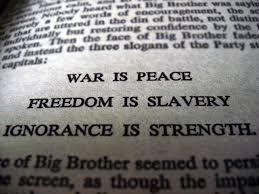
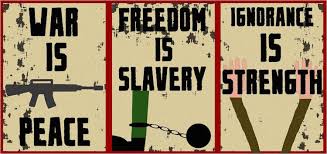
Variations on an Orwellian theme were added by DP.

˜˜˜˜˜


Nothing But Eyes To Weep

In a previous post, we touched on the work of Giorgio Agamben regarding the “state of exception”, and the concept of “bare life” as it applied to extra-judicial detention at Guantanamo Bay. In her recently published One Long Night, Andrea Pitzer explores the legal and historical roots of concentration camps, among them the American Civil War’s Lieber Code of Conduct and Sherman’s scorched earth March to the Sea.

Excerpts from her introduction below, with images added by DP.

SAVANNAH

COLUMBIA

NAGASAKI

˜˜˜˜˜


How To Read Two Donalds

Now comes a timely and powerful exhibition at Schindler House , How to Read El Pato Pascual: Disney’s Latin America and Latin America’s Disney. From the exhibition’s website:

The exhibition’s curators, filmmaker/writer Jesse Lerner and artist Rubén Ortiz-Torres, thoroughly examined Disney’s long engagement with Latin American culture, from Donald Duck’s first featured role in the 1937 Mexican-themed short Don Donald to the company’s 2013 attempt to trademark the Day of the Dead. Lerner and Ortiz-Torres’s research further drew from a pivotal trip Walt Disney took with his team to South America in 1941. Along with a group of fifteen animators, musicians, and screenwriters, Disney flew to over five South American countries as part of a U.S. government-directed effort to promote the “Good Neighbor” policy during the Second World War. In addition to the celebrated film The Three Caballeros, this trip produced the feature Saludos Amigos; a “making of” documentary titled South of the Border with Disney; and propaganda films such as The Grain that Built a Hemisphere. 

The infamous 1971 Chilean book by scholars Ariel Dorfman and Armand Mattelart, Para leer al Pato Donald (How to Read Donald Duck), was brought to Ortiz-Torres’s attention while studying with artist Michael Asher at the Disney-funded CalArts in the 1990s. The book (formerly banned in Chile and threatened by legal action in the U.S.) provides a structural analysis denouncing the ways in which Disney comic books were used as vehicles to justify and promote U.S. policies and cultural imperialism.

Arief Dorfman expands on the history of his essay (and its suppression both in Chile and in the US) in a recent essay on Truthout, excerpted below.

˜˜˜˜˜


In Profound Isolation

During a time of year when we crave the solitude of the deep forest, we revisit a few paragraphs of an essay by William Deresiewicz, dating from 2009. The image is from the solitary studio of Michel Nedjar.

˜˜˜˜˜


What’s Truly At Stake

Now comes a timely interview published by The Intercept between journalist Jon Schwartz and the novelist Suki Kim. Born in South Korea yet  having lived in the U.S. since the age 13, Kim spent much of 2011 teaching English to the children of North Korea’s elite, attending the Pyongyang University of Science and Technology, an experience that became the subject matter for her remarkable 2014 book, “Without You There Is No Us.”

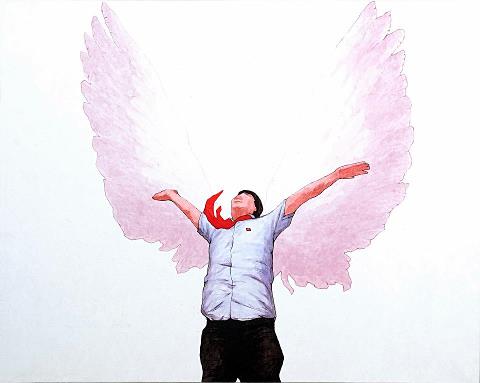
Below, two excerpts from the interview that we found particularly compelling, intercut with images from the work of Song Byeok.

˜˜˜˜˜

TAKE OFF YOUR CLOTHES


LET ME TASTE IT

HOPE

˜˜˜˜˜


Of Silence and the Flood

This week, we turn to an interview on Democracy Now: the voice of George Monbiot, who articulates a number of uncomfortable issues not addressed by the media storm surrounding hurricane Harvey’s itinerary over the past week.

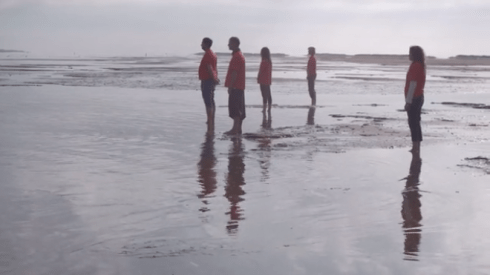
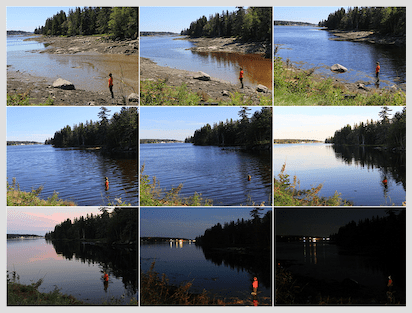
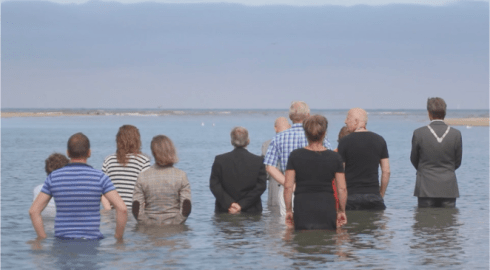
Images are from 36.5, a “duration performance with the sea” conceived by Sarah Cameron Sunde.

˜˜˜˜˜

˜˜˜˜˜

From Sunde’s project website, we relay the following:

36.5 / a durational performance with the sea is a time-based project spanning seven years and six continents: New York-based artist Sarah Cameron Sunde stands in a tidal area for a full cycle, usually 12-13 hours, as water engulfs her body and then reveals it again. The public is invited to participate by joining Sarah in the water and by marking the passing hours from the shore. The project began in 2013 as a response to Hurricane Sandy’s impact on New York City and the parallel that Sunde saw in the the struggle for an artist to survive on a daily basis and the struggle of humanity to survive in the face of sea-level rise. The project was developed in Maine, Mexico and San Francisco 2013-2014, and launched on a global scale in The Netherlands in 2015. The fifth iteration was recently completed in Bangladesh. The performance is filmed from multiple perspectives and then translated into a multi-channel video installation that can communicate with a wider audience. 

Plans are underway for future iterations in New Zealand, Brazil, and Senegal, and working towards a large-scale iteration in New York City with an anticipated date of August 2020. 36.5 acknowledges the temporary nature of all things and considers our contemporary relationship to water, as individuals, in community, and as a civilization.