

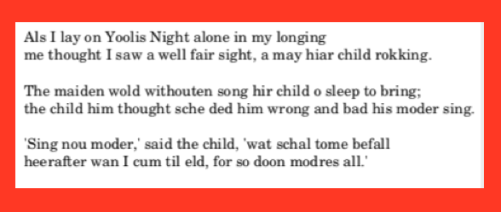
Now comes David Farrier, author of Footprints: In Search of Future Fossils, with an essay in the venerable and indispensable Orion magazine; it is not too late to purchase a gift subscription!
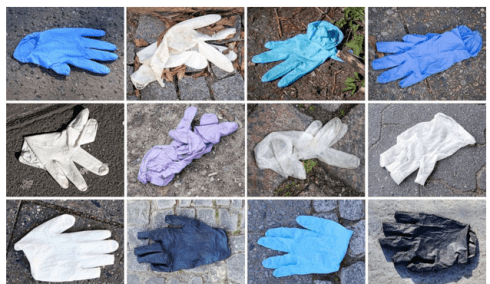
An ungloved handful of excerpted paragraphs below, with images collected from the tidal wash of the digital ocean.
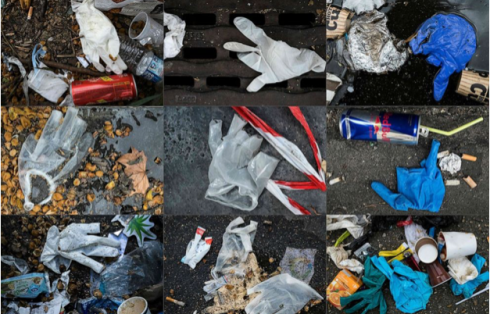
[…]
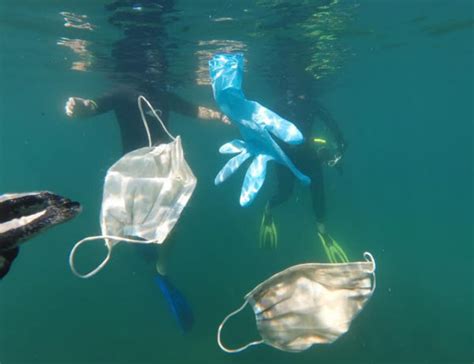
*****
Today, a man named Brandon Bernard was executed for a a crime committed when he was eighteen, in circumstances clouded by numerous unanswered questions. Appeals for clemency fell on deaf ears.
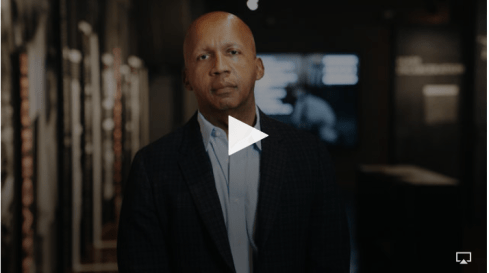
Now comes the honorable Bryan Stevenson, a winner of this year’s “Right Livelihood” award, for his tireless work exposing, documenting and fighting against the injustices of the Carceral State. Below, his acceptance speech for the award.
Images are from the most powerful work of public art in North America: the museum and memorial created by Stevenson’s Equal Justice Initiative in Montgomery, Alabama.

Evidence From a Regime of Racial Terror
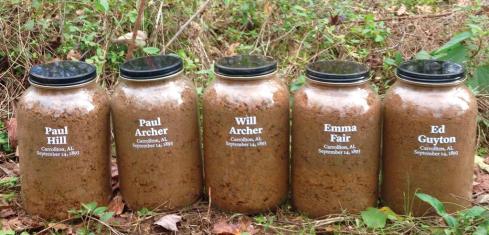
Names to Recollect
Below, a link to the video of the above speech:
******
In a fascinating essay in the most recent New York Review of Books, Fintan O’Toole refers to the rise of “zombie politics”, and to Trumpism as akin to a necromantic death cult. Consistent with his observations, we note that five federal executions have been scheduled between now and the way overdue termination of this relentlessly omnicidal administration.
This week, we bend an ear to the exceptionally strong voice of Sister Helen Prejean, a longstanding opponent of the death penalty, first with an excerpt from a recent interview and then with a passage from her 1993 book, Dead Man Walking. Images added by DP.




And now to the passage from Dead Man Walking:




•••••••
Now comes Hegel scholar and political philosopher Alexander Kojève, writing in 1943. We dare say the “records” to which he alludes in the second paragraph have surely been not just broken but shattered during the relentlessly mendacious Trump years, most notably (and dangerously) in the abundance of bunkum saturating the vast & delusional MAGA zone in the aftermath of recent elections.
The entire essay is worth your consideration; excerpts below, with a couple of emblematic images.

THE GREATEST LEADER EVER & FOREVER & A DAY UNTIL DEATH DO US PART AMEN


AND HIS MOST TRUSTED LEGAL ADVISOR

˜˜˜˜˜˜˜˜
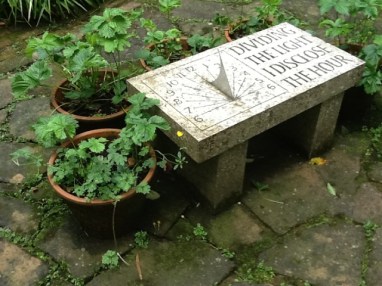
Now comes Rob Hopkins, co-founder of the Transition Network and author of From What Is to What If, speaking in an interview last year, voicing ideas that ring with even greater urgency today. Images are relayed from Little Sparta, a hippocampus campus where “small and tortured thought” (see the quote from Susan Griffin below) is strictly forbidden.



We note that Hopkins begins his excellent book with two sentences from Susan Griffin’s brilliant To Love the Marigold; below, the entire passage, worthy of close and repeated readings:

*****
Longtime readers of DP know of our deep aversion to social media: we are not linked to Facebook in any way, nor have we ever dipped a single toe into the toxic backwaters of the Twittersphere. We have no Instagram feed, nor do we Snapchat. To be clear, we are not “late adapters”; we were early refusers!
The shallow promises of Social Media, to connect everyone to everybody while feeding egos and pumping addictive endorphins, are nothing but camouflage for the vast data mine that is both social heart and economic engine for Surveillance Capitalism.
The varied platforms of Social Media also incubate and accelerate a detachment of American political life from the world of verifiable facts and evidence, with potentially catastrophic results, as evidenced by the increasingly aberrant outbursts from King Tweet (Exhibit A, below).
The algorithm does not care about truth; the algorithm only cares about behavior.
Below a few lucid remarks from political historian and distinguished essayist Jill Lepore, in an interview following the publication of her recent book about the Simulmatics Corporation, an early probe into the commodification of human subjectivity via the data mine.


EXHIBIT A
Daffy as it may be: amen to that.
********
In this time of divisive agony, the three simple words of our title are worthy of sustained meditation.
The people, united.
For example: The people, united against Climate Emergency; the people, united against Covid-19; the people, united against White Supremacism. Yet here we are, a country of highly armed splinters, awaiting combustion into a firestorm of violence.
Meanwhile, south of our borders in Chile, we are witnessing an exemplary embodiment of the creative potential of a people, united. By an overwhelming majority, Chileans have initiated a process to replace their draconian state-of-emergency Pinochet-era Constitution with a new system of governance that will more accurately reflect the needs and dreams of — un pueblo, unido.
Now comes Chilean-American Ariel Dorfman writing in a recent essay, suggesting that possibly we might take up such a challenge ourselves, and conceive a more perfect union as our body politic spins and heaves.
Brief excerpts below, with an intervening link to an extraordinary video that we recommend watching at least once a day between now and the end of November.

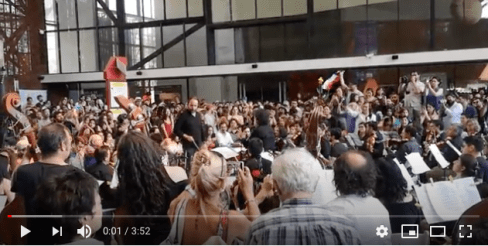

Good questions, all.
*********
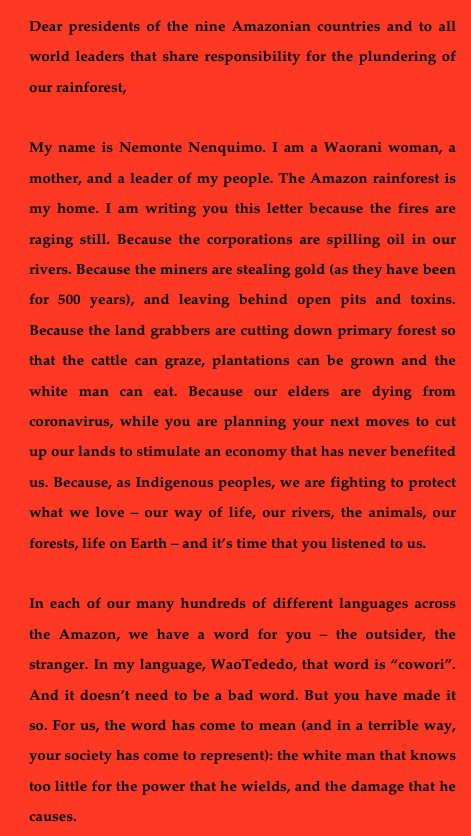
Thanks to all who responded with such sacred rage and support for last week’s post, in which we amplified the voice of Amazonian indigenous leader Nemonte Nenquimo; this week we bend an ear to another voice that echoes Nenquimo in its urgency, yet from a different location in the Global South: Australia, following the horrific 2019-2020 burn season, known as “Black Summer”.
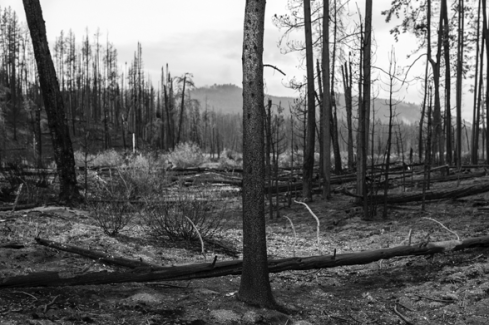
Now comes Joëlle Gergis, writing from the front lines of the deepening Climate Emergency in a recent essay, excerpted below. Images are relayed from the site of artist Giuseppe Licari, documenting an installation dating from 2016, titled Contrappunto.



*****
About his work, Licari writes:
My work explores the socio-economical, cultural and political practices that intervene on, and alter the form of contemporary natural landscapes around us. Subject both of science and art, the landscape functions both as a mirror and as a lens: in it we see the space we occupy and ourselves as we occupy it. With my work I abstract and re-interpret landscapes engaging in an open-ended investigation of transferring the physical experience of a territory away from the locus of its original existence via discrete or bold interventions.
My aim is to confront the public with nature’s omnipresence, creating new spaces of sensorial and social experiences. Intending to provide the audience with an active role in my work I use a variety of techniques and media, such as installations, performances, workshops and public art, to better address the needs of each idea. The heterotopic landscapes I create constitute places of memories in which the emotions of single individuals become inevitably part of a collective experience.
*****
This week, reeling from relentlessly alarming data such as temperature change in the deep ocean, quadrillions of plastic fibers in the single state of California, and reports of the “dying sea ice” in the Arctic, we simply relay a voice of Amazonian indigenous leader Nemonte Nenquimo (pictured below) as she addresses the ignorant “leaders” of her region and the world in a recently published letter, excerpted below.


˜˜˜˜˜˜˜

 Desperado Philosophy